Notice: This page requires JavaScript to function properly.
Please enable JavaScript in your browser settings or update your browser.
Apprendre Introduction to Linked List | Implementing Data Structures
Quizzes & Challenges
Quizzes
Challenges
/
C Structs

bookIntroduction to Linked List

Earlier, you worked with arrays — a simple and widely used data structure in C. Arrays store multiple values of the same type and let you access them by index, which works well when the number of elements is fixed and known in advance.

But real programs often require more flexibility. The amount of data may change over time, and inserting or removing elements in an array can be inefficient. Arrays also rely on a continuous block of memory, which is not always practical.

To handle these limitations, C provides another fundamental structure — the linked list.

What Is a Linked List?

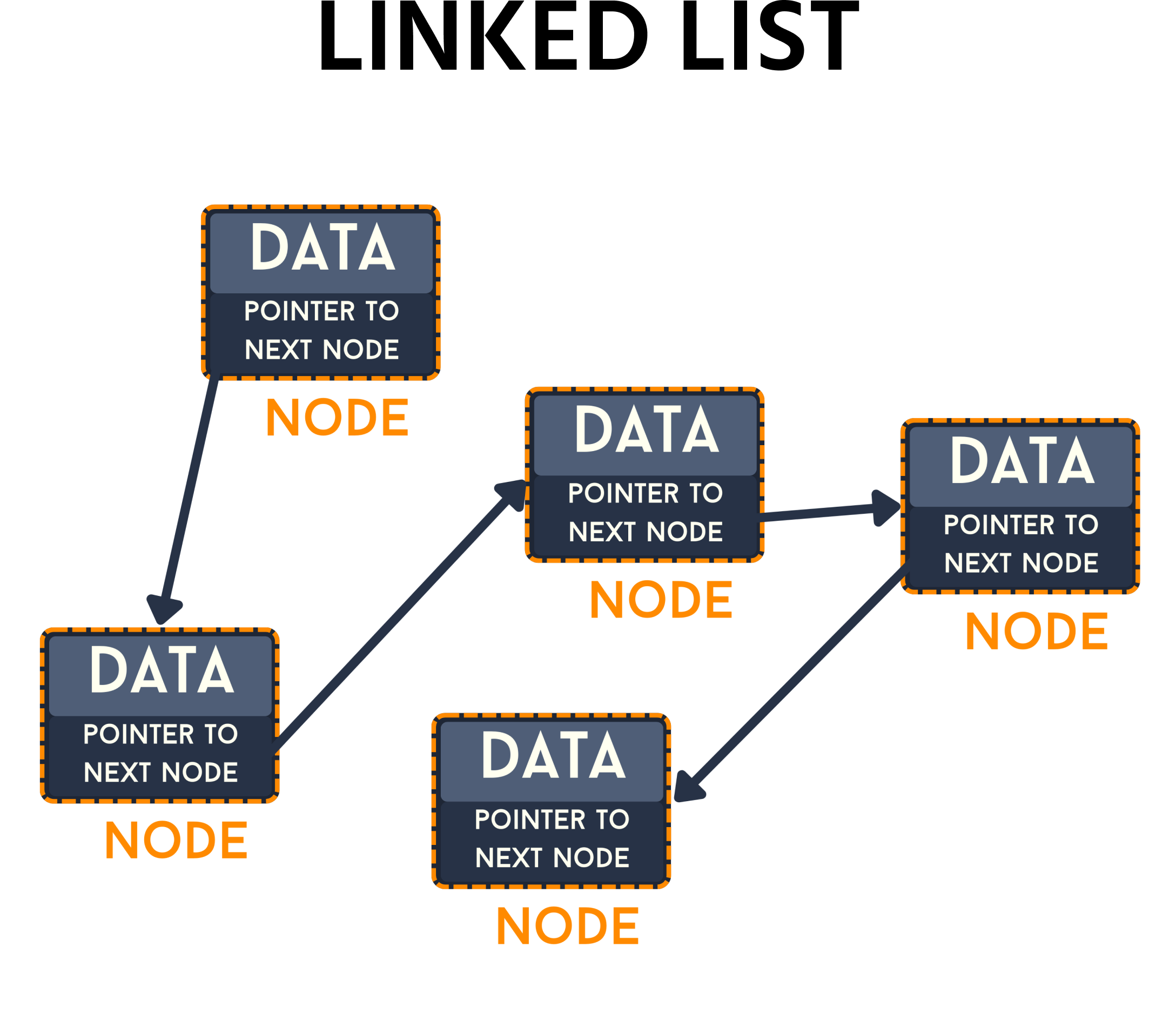
If an array is a fixed block of memory with elements stored next to each other, then a linked list is a chain of separate nodes connected through pointers.

Instead of a fixed layout with a predefined size, the linked list is built dynamically — nodes are created one by one as the program runs, and each node is linked to the next.

Arrays vs Linked Lists

Linked lists become a natural choice in situations where the structure must be flexible. They work well when you expect the number of elements to change during runtime, when you need to insert or delete elements without unnecessary data shifting, and when allocating a large continuous memory block is not ideal.

question mark

Why are arrays not ideal for frequent insertions and deletions?

Select the correct answer

Tout était clair ?

Comment pouvons-nous l'améliorer ?

Merci pour vos commentaires !

Section 5. Chapitre 1

Demandez à l'IA

expand

Demandez à l'IA

ChatGPT

Posez n'importe quelle question ou essayez l'une des questions suggérées pour commencer notre discussion

Suggested prompts:

Can you explain how a linked list is implemented in C?

What are the different types of linked lists?

Can you give an example of when to use a linked list instead of an array?

bookIntroduction to Linked List

Glissez pour afficher le menu

Earlier, you worked with arrays — a simple and widely used data structure in C. Arrays store multiple values of the same type and let you access them by index, which works well when the number of elements is fixed and known in advance.

But real programs often require more flexibility. The amount of data may change over time, and inserting or removing elements in an array can be inefficient. Arrays also rely on a continuous block of memory, which is not always practical.

To handle these limitations, C provides another fundamental structure — the linked list.

What Is a Linked List?

If an array is a fixed block of memory with elements stored next to each other, then a linked list is a chain of separate nodes connected through pointers.

Instead of a fixed layout with a predefined size, the linked list is built dynamically — nodes are created one by one as the program runs, and each node is linked to the next.

Arrays vs Linked Lists

Linked lists become a natural choice in situations where the structure must be flexible. They work well when you expect the number of elements to change during runtime, when you need to insert or delete elements without unnecessary data shifting, and when allocating a large continuous memory block is not ideal.

question mark

Why are arrays not ideal for frequent insertions and deletions?

Select the correct answer

Tout était clair ?

Comment pouvons-nous l'améliorer ?

Merci pour vos commentaires !

Section 5. Chapitre 1
some-alt