NoSQL
Swipe to show menu
NoSQL, which stands for "Not Only SQL", refers to a broad category of database management systems that are designed to handle a wide variety of data models, particularly non-relational or semi-structured data.
Unlike traditional relational databases, which use structured query language (SQL) to define and manipulate data, NoSQL databases offer a more flexible schema design and are optimized for large-scale data storage and retrieval.
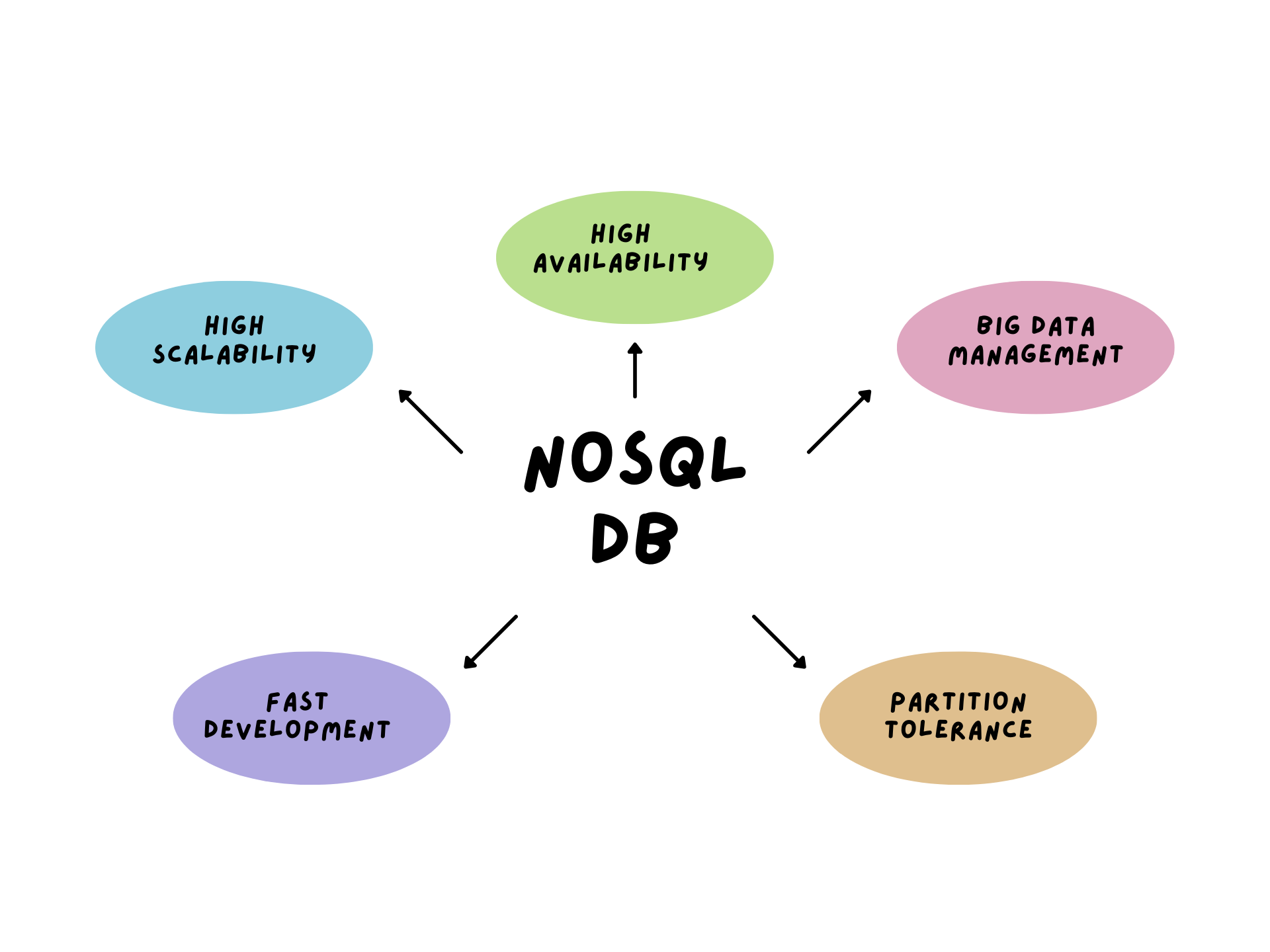
Why NoSQL?
NoSQL databases are designed to handle:
- Unstructured or Semi-structured Data: data that does not fit neatly into tables, rows, and columns, such as JSON documents, key-value pairs, graphs, and wide-column stores;
- High Scalability: horizontal scaling, where databases can distribute data across many servers, making it easier to handle large volumes of data and high transaction loads;
- Flexibility: dynamic schemas that allow for the addition of new fields without the need for database downtime or complex schema migrations.

A real-life case where NoSQL is preferable is in social media platforms, such as Facebook or Twitter. These platforms handle massive amounts of unstructured data, including user posts, comments, likes, and multimedia content, which are continuously generated at high velocity. NoSQL databases provide the scalability and flexibility needed to efficiently manage and quickly retrieve this diverse and dynamic data without the constraints of a fixed schema.
NoSQL database types
Thanks for your feedback!
Ask AI

Ask AI

Ask anything or try one of the suggested questions to begin our chat
