Social Media Analysis and Competitor Research
Свайпніть щоб показати меню
Essential Social Media Metrics
The cycle of a professional SMM specialist is Analysis – Strategy – Implementation – Analytics. Analysis and Strategy are going with the key metrics.
Target Audience Analysis

The target audience (TA) is the group of consumers for whom a business's product is intended. It's the people whose problems the product can solve or whose needs it can fulfill. Typically, this makes up around 80% of consumers.
An SMM specialist doesn't create a target audience for the business; they study the people who are already customers or interested in the product.
The target audience is shaped by the business's positioning.
Mistakes of an inexperienced SMM specialist:
- Trying to make the project appeal to everyone, without adapting it to the specific target audience;
- Assuming that the target audience consists only of those currently interested in the product;
- Working with a pre-defined audience without conducting further research.
Researching the Target Audience (TA) involves several key strategies to gain valuable insights.
Start by monitoring brand mentions and relevant keywords on social media to understand audience sentiment and behavior.
Conduct direct surveys to explore their needs, preferences, and challenges more deeply.
Utilize social media analytics tools to gather data on interests and online habits.
Interviews with current or potential customers provide qualitative insights, while researching competitors' audiences helps identify overlaps and opportunities for expansion.
After identifying your target audience, segmentation is crucial.
Segmentation Can be Done By:
Your target audience is shaped by the project's positioning. Your USP (Unique Selling Proposition) should be integrated into everything, from your website and advertising to customer service.
To create a strong USP, you need to understand:
- What do you do better than your competitors? (e.g., fast delivery, unique product?)
- What does your target audience desire?
- What do your competitors do better than you?
Additionally:
- What product qualities are most important to your customer?
- List your product's features and rank them by importance.
- Compare your product with your competitors based on these features.
- Identify the key factors that will shape your USP.
Formulas for creating a USP:
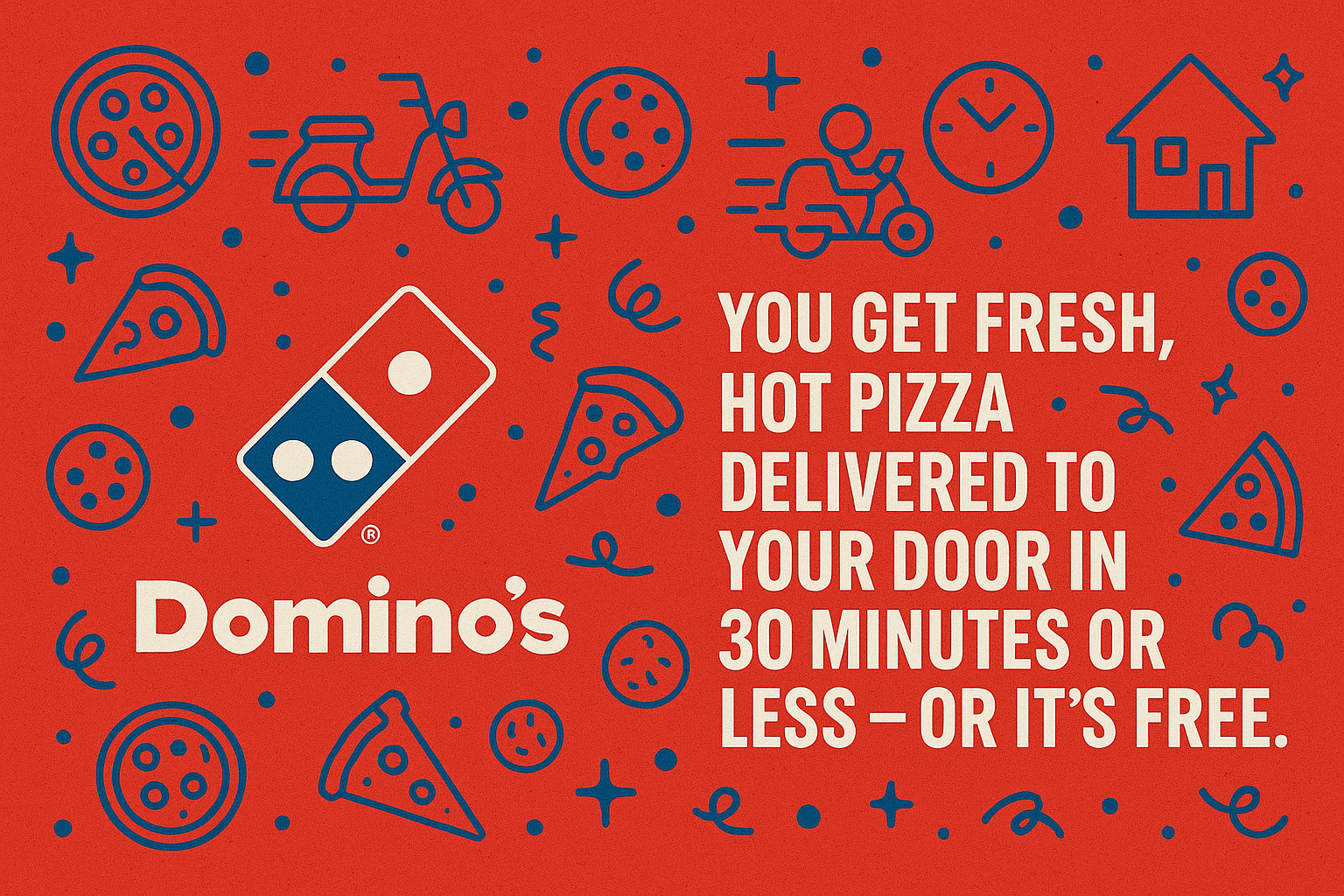
- Need + Result + Guarantee (Domino's);
- Need + Important Feature (M&Ms);
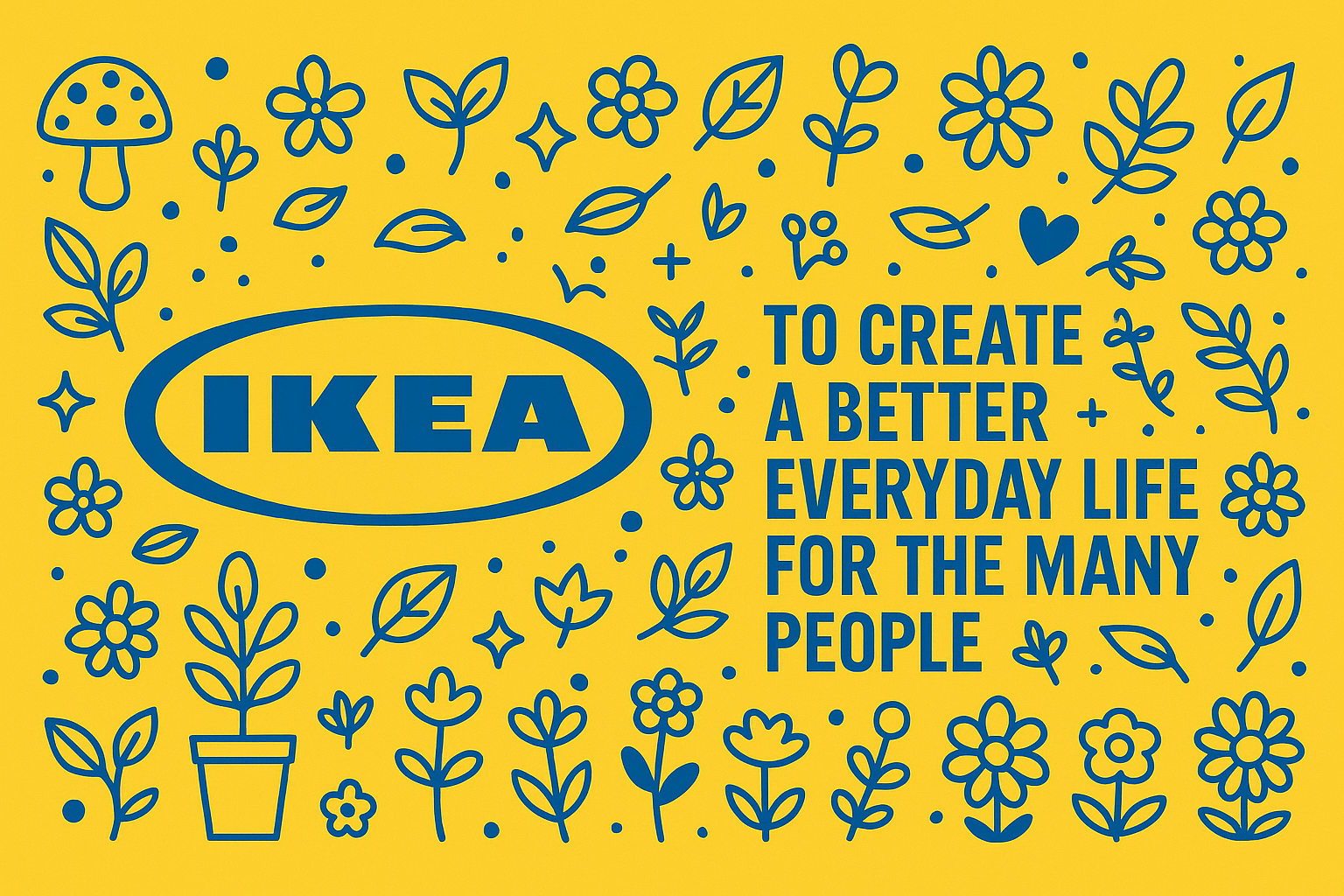
- TA + Need + Solution (IKEA).

Competitor Analysis
Competitor analysis is the study of what your competitors are doing on social media. This includes looking at which platforms they use, what kind of content they post, how frequently they post, and how their audience responds.
The goal is to learn what's working for your competitors and do it better. It helps you stand out, avoid their mistakes, create effective strategies, stay up-to-date with trends, and engage more of your target audience.
Who is Your Competitor?
Your competitor is the one you're battling for the attention of the same target audience. If a business offers the same services but isn't targeting your audience, they're not your competitor.
How do you find competitors for analysis:
- Google relevant keywords;
- Ask your customers;
- Search on social media.
What should you evaluate?
- Content categories;
- High-engagement content;
- Content trends in the niche;
- Content formats (visuals, Stories styling, Reels formats);
- Activities (contests, events);
- Posting frequency.
It's also important to understand:
- Is the content tailored to the target audience, or is it content for the sake of content?
- Is the USP strong?
- Do the social media platforms reflect the brand's philosophy and core values?
- What's the tone of voice, and is there communication in comments or messages? How fast are the responses?
Competitor analysis is a lengthy process that can take a week or more, but it's crucial, especially when you're just starting to work with a brand.
Developing the Effective SMM Strategy
A clear strategy helps guide your efforts and ensures that you stay focused on your goals, whether you're looking to increase engagement, boost sales, or grow your brand.
Professional content strategy consists:
- Brand's mission and philosophy;
- Target audience analysis;
- Competitor analysis;
- SMART goals (Specific, Measurable, Achievable, Relevant, and Time-bound);
- Traffic format (Paid traffic, budget);
- Visual concept;
- Conclusions and recommendations.
Goals can be:
- Business goals: e.g. increasing revenue, sales, improving the company's market position;
- Marketing goals: attracting new customers, improving loyalty, changing the customer base, increasing awareness of the company's product or service;
- Communication goals: boosting brand recognition, building or strengthening the company's image, driving website traffic, or generating leads;
- Media goals: achieving certain metrics for reach, engagement, reactions, comments, or traffic.
OKR
It stands for Objectives and Key Results, which are broader goals tied to measurable outcomes. For example, if your objective is to build brand awareness, your key results could include metrics like reaching 50,000 impressions and being featured by two influencers within six months.
KPI
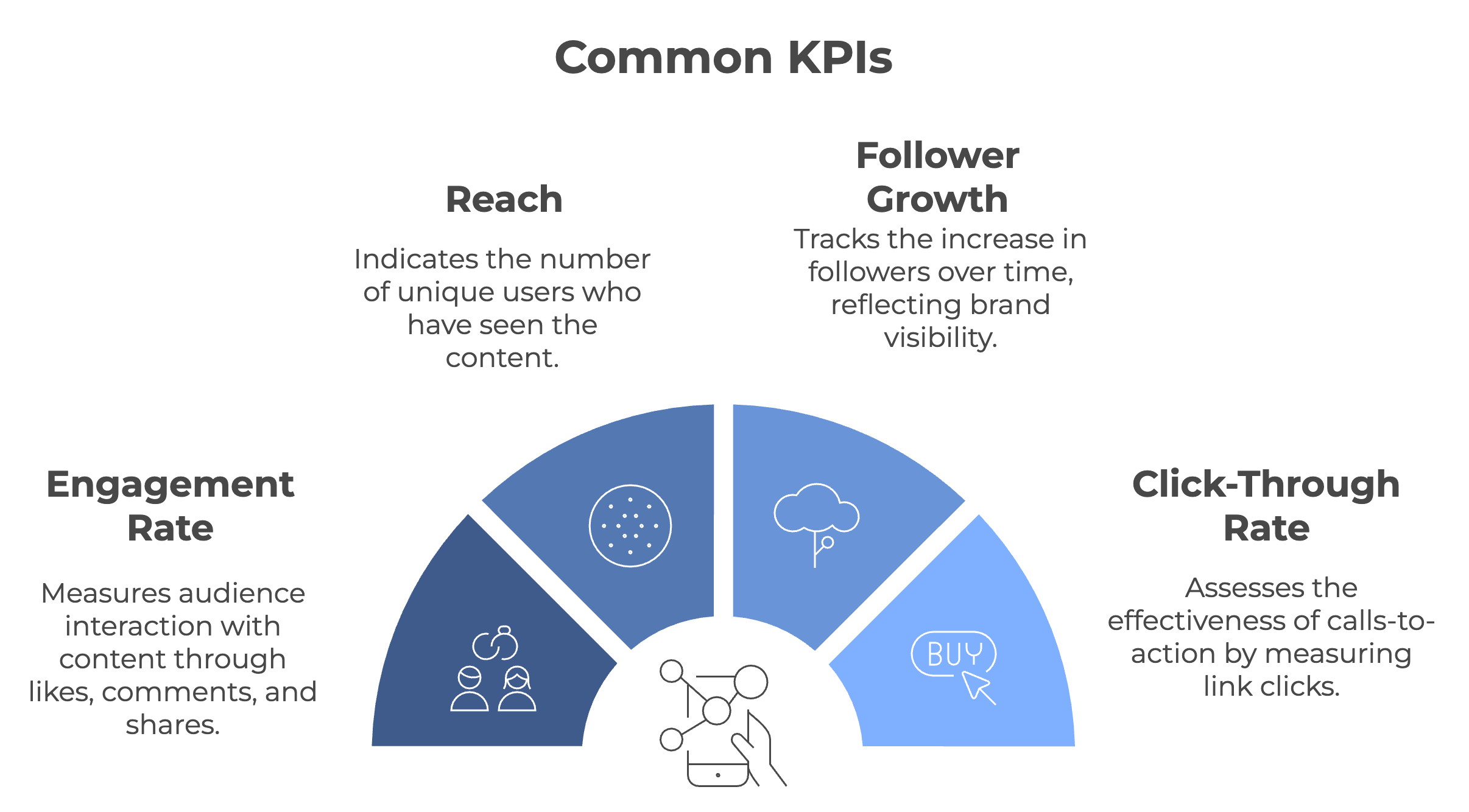
It stands for Key Performance Indicator, and these are specific metrics that track your progress. KPIs can include things like CTR (click-through rate), engagement rate, and conversion rate. These metrics help you understand what's working and where you might need to adjust your approach.
The key questions your strategy answers:
- What is the goal of our business?
- What do we do? How do we do it?
- What do we value?
- Who are we doing this for? Who is our target audience?
- What makes us different? What's our Unique Selling Proposition (USP)?
- What is our brand personality? What is our Tone of Voice (ToV)?
It's not enough just to have a strategy, you need to follow it.
Advanced Analytics and Performance Measurement
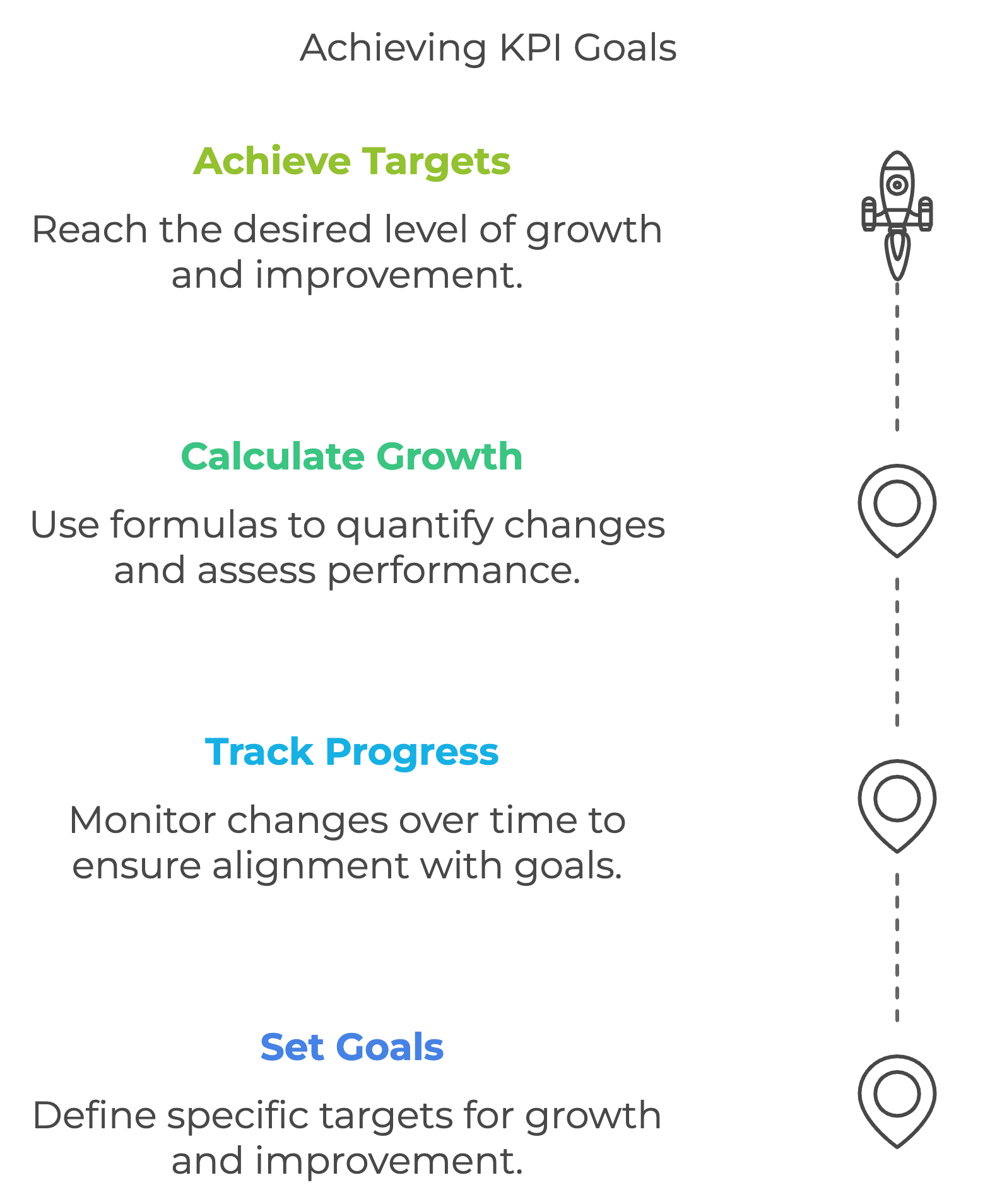
Key Performance Indicators (KPI) and Key Performance Results (KPR) are essential metrics in SMM, helping to measure campaign success and impact.
KPIs are measurable values that indicate how effectively your SMM campaigns are achieving their objectives. These metrics focus on specific targets such as engagement, traffic, or conversions.
KPRs measure the actual outcomes achieved at the end of a campaign. While KPIs track progress during a campaign, KPRs confirm whether goals were met. For instance, if your KPI was to grow website traffic by 20%, the KPR shows the exact percentage achieved (e.g., 22%).
If your social media goal was to generate 1,000 sign-ups from a campaign, the KPR would confirm whether you reached, exceeded, or fell short of that target.
Effective Stakeholder Communication
Briefing and Debriefing Sessions
These are crucial touchpoints to ensure that the project's goals, expectations, and outcomes are clearly defined and understood by all parties.
The Briefing Process
- Objective outline: make a brief outlines the project's objectives, target audience, communication channels, and planned activities. This document serves as a reference point throughout the project and guides the stakeholders' roles;
- Customization: customize the briefing process for each stakeholder. For example, provide a detailed strategy overview for clients while focusing on tactical deliverables for creative teams.
Strategic Brand Sessions
Purpose: strategic brand sessions are deep-dive meetings in which you explore the motivations, goals, and vision for the social media project. They help clarify the brand's unique identity and how it should be communicated.
Example: during a brand session for a new product launch, the focus might be on understanding the client's long-term vision for their social media presence, including the brand tone, message, and target audience.
Debriefing
Conduct a debrief after each campaign or significant milestone to analyze performance and gather feedback. This helps refine the strategy and ensures continuous improvement.
Tip: use the debrief to identify both successes and areas for improvement, aligning future efforts with lessons learned.
Strategic brand sessions are workshops or in-depth meetings that aim to discover a brand's identity, help align the SMM team with the brand's identity, and ensure that social media content reflects the brand's values and goals.
Brand sessions provide a space for brainstorming and deep discussions about what makes a brand unique. These sessions help clarify messaging, voice, and positioning.
Example: a brand session for a tech startup might focus on establishing a consistent tone of voice that balances innovation with approachability.
Structure of a Brand Session
- Preparation: send a detailed brief to the client in advance, outlining the questions and topics to be covered. Set aside ample time for discussion (typically 2-3 hours);
- Execution: during the session, unpack the client's goals, business motivations, and vision for social media growth;
- Follow-up: summarize the key takeaways and ideas from the session and ensure all stakeholders agree on the next steps.
1. If a post was seen by 3,000 unique users organically, and 1 000 through paid ads, what was the Total Reach?
2. You had 120 clicks on your posts across 10 publications. Calculate the Engagement Rate (ER).
3. If an ad receives 300 clicks from 10,000 impressions, what is the CTR?
4. If a company's goal is to boost brand recognition and strengthen its image, what kind of goal is this?
5. If a campaign's KPI was to increase website traffic by 20%, and the KPR shows a 22% increase, what does this indicate?
Дякуємо за ваш відгук!
Запитати АІ

Запитати АІ

Запитайте про що завгодно або спробуйте одне із запропонованих запитань, щоб почати наш чат
Social Media Analysis and Competitor Research
Essential Social Media Metrics
The cycle of a professional SMM specialist is Analysis – Strategy – Implementation – Analytics. Analysis and Strategy are going with the key metrics.
Target Audience Analysis
The target audience (TA) is the group of consumers for whom a business's product is intended. It's the people whose problems the product can solve or whose needs it can fulfill. Typically, this makes up around 80% of consumers.
An SMM specialist doesn't create a target audience for the business; they study the people who are already customers or interested in the product.
The target audience is shaped by the business's positioning.
Mistakes of an inexperienced SMM specialist:
- Trying to make the project appeal to everyone, without adapting it to the specific target audience;
- Assuming that the target audience consists only of those currently interested in the product;
- Working with a pre-defined audience without conducting further research.
Researching the Target Audience (TA) involves several key strategies to gain valuable insights.
Start by monitoring brand mentions and relevant keywords on social media to understand audience sentiment and behavior.
Conduct direct surveys to explore their needs, preferences, and challenges more deeply.
Utilize social media analytics tools to gather data on interests and online habits.
Interviews with current or potential customers provide qualitative insights, while researching competitors' audiences helps identify overlaps and opportunities for expansion.
After identifying your target audience, segmentation is crucial.
Segmentation Can be Done By:
Your target audience is shaped by the project's positioning. Your USP (Unique Selling Proposition) should be integrated into everything, from your website and advertising to customer service.
To create a strong USP, you need to understand:
- What do you do better than your competitors? (e.g., fast delivery, unique product?)
- What does your target audience desire?
- What do your competitors do better than you?
Additionally:
- What product qualities are most important to your customer?
- List your product's features and rank them by importance.
- Compare your product with your competitors based on these features.
- Identify the key factors that will shape your USP.
Formulas for creating a USP:
- Need + Result + Guarantee (Domino's);
- Need + Important Feature (M&Ms);
- TA + Need + Solution (IKEA).
Competitor Analysis
Competitor analysis is the study of what your competitors are doing on social media. This includes looking at which platforms they use, what kind of content they post, how frequently they post, and how their audience responds.
The goal is to learn what's working for your competitors and do it better. It helps you stand out, avoid their mistakes, create effective strategies, stay up-to-date with trends, and engage more of your target audience.
Who is Your Competitor?
Your competitor is the one you're battling for the attention of the same target audience. If a business offers the same services but isn't targeting your audience, they're not your competitor.
How do you find competitors for analysis:
- Google relevant keywords;
- Ask your customers;
- Search on social media.
What should you evaluate?
- Content categories;
- High-engagement content;
- Content trends in the niche;
- Content formats (visuals, Stories styling, Reels formats);
- Activities (contests, events);
- Posting frequency.
It's also important to understand:
- Is the content tailored to the target audience, or is it content for the sake of content?
- Is the USP strong?
- Do the social media platforms reflect the brand's philosophy and core values?
- What's the tone of voice, and is there communication in comments or messages? How fast are the responses?
Competitor analysis is a lengthy process that can take a week or more, but it's crucial, especially when you're just starting to work with a brand.
Developing the Effective SMM Strategy
A clear strategy helps guide your efforts and ensures that you stay focused on your goals, whether you're looking to increase engagement, boost sales, or grow your brand.
Professional content strategy consists:
- Brand's mission and philosophy;
- Target audience analysis;
- Competitor analysis;
- SMART goals (Specific, Measurable, Achievable, Relevant, and Time-bound);
- Traffic format (Paid traffic, budget);
- Visual concept;
- Conclusions and recommendations.
Goals can be:
- Business goals: e.g. increasing revenue, sales, improving the company's market position;
- Marketing goals: attracting new customers, improving loyalty, changing the customer base, increasing awareness of the company's product or service;
- Communication goals: boosting brand recognition, building or strengthening the company's image, driving website traffic, or generating leads;
- Media goals: achieving certain metrics for reach, engagement, reactions, comments, or traffic.
OKR
It stands for Objectives and Key Results, which are broader goals tied to measurable outcomes. For example, if your objective is to build brand awareness, your key results could include metrics like reaching 50,000 impressions and being featured by two influencers within six months.
KPI
It stands for Key Performance Indicator, and these are specific metrics that track your progress. KPIs can include things like CTR (click-through rate), engagement rate, and conversion rate. These metrics help you understand what's working and where you might need to adjust your approach.
The key questions your strategy answers:
- What is the goal of our business?
- What do we do? How do we do it?
- What do we value?
- Who are we doing this for? Who is our target audience?
- What makes us different? What's our Unique Selling Proposition (USP)?
- What is our brand personality? What is our Tone of Voice (ToV)?
It's not enough just to have a strategy, you need to follow it.
Advanced Analytics and Performance Measurement
Key Performance Indicators (KPI) and Key Performance Results (KPR) are essential metrics in SMM, helping to measure campaign success and impact.
KPIs are measurable values that indicate how effectively your SMM campaigns are achieving their objectives. These metrics focus on specific targets such as engagement, traffic, or conversions.
KPRs measure the actual outcomes achieved at the end of a campaign. While KPIs track progress during a campaign, KPRs confirm whether goals were met. For instance, if your KPI was to grow website traffic by 20%, the KPR shows the exact percentage achieved (e.g., 22%).
If your social media goal was to generate 1,000 sign-ups from a campaign, the KPR would confirm whether you reached, exceeded, or fell short of that target.
Effective Stakeholder Communication
Briefing and Debriefing Sessions
These are crucial touchpoints to ensure that the project's goals, expectations, and outcomes are clearly defined and understood by all parties.
The Briefing Process
- Objective outline: make a brief outlines the project's objectives, target audience, communication channels, and planned activities. This document serves as a reference point throughout the project and guides the stakeholders' roles;
- Customization: customize the briefing process for each stakeholder. For example, provide a detailed strategy overview for clients while focusing on tactical deliverables for creative teams.
Strategic Brand Sessions
Purpose: strategic brand sessions are deep-dive meetings in which you explore the motivations, goals, and vision for the social media project. They help clarify the brand's unique identity and how it should be communicated.
Example: during a brand session for a new product launch, the focus might be on understanding the client's long-term vision for their social media presence, including the brand tone, message, and target audience.
Debriefing
Conduct a debrief after each campaign or significant milestone to analyze performance and gather feedback. This helps refine the strategy and ensures continuous improvement.
Tip: use the debrief to identify both successes and areas for improvement, aligning future efforts with lessons learned.
Strategic brand sessions are workshops or in-depth meetings that aim to discover a brand's identity, help align the SMM team with the brand's identity, and ensure that social media content reflects the brand's values and goals.
Brand sessions provide a space for brainstorming and deep discussions about what makes a brand unique. These sessions help clarify messaging, voice, and positioning.
Example: a brand session for a tech startup might focus on establishing a consistent tone of voice that balances innovation with approachability.
Structure of a Brand Session
- Preparation: send a detailed brief to the client in advance, outlining the questions and topics to be covered. Set aside ample time for discussion (typically 2-3 hours);
- Execution: during the session, unpack the client's goals, business motivations, and vision for social media growth;
- Follow-up: summarize the key takeaways and ideas from the session and ensure all stakeholders agree on the next steps.
Дякуємо за ваш відгук!
