Channels & the Customer Journey
Setting Clear Marketing Objectives
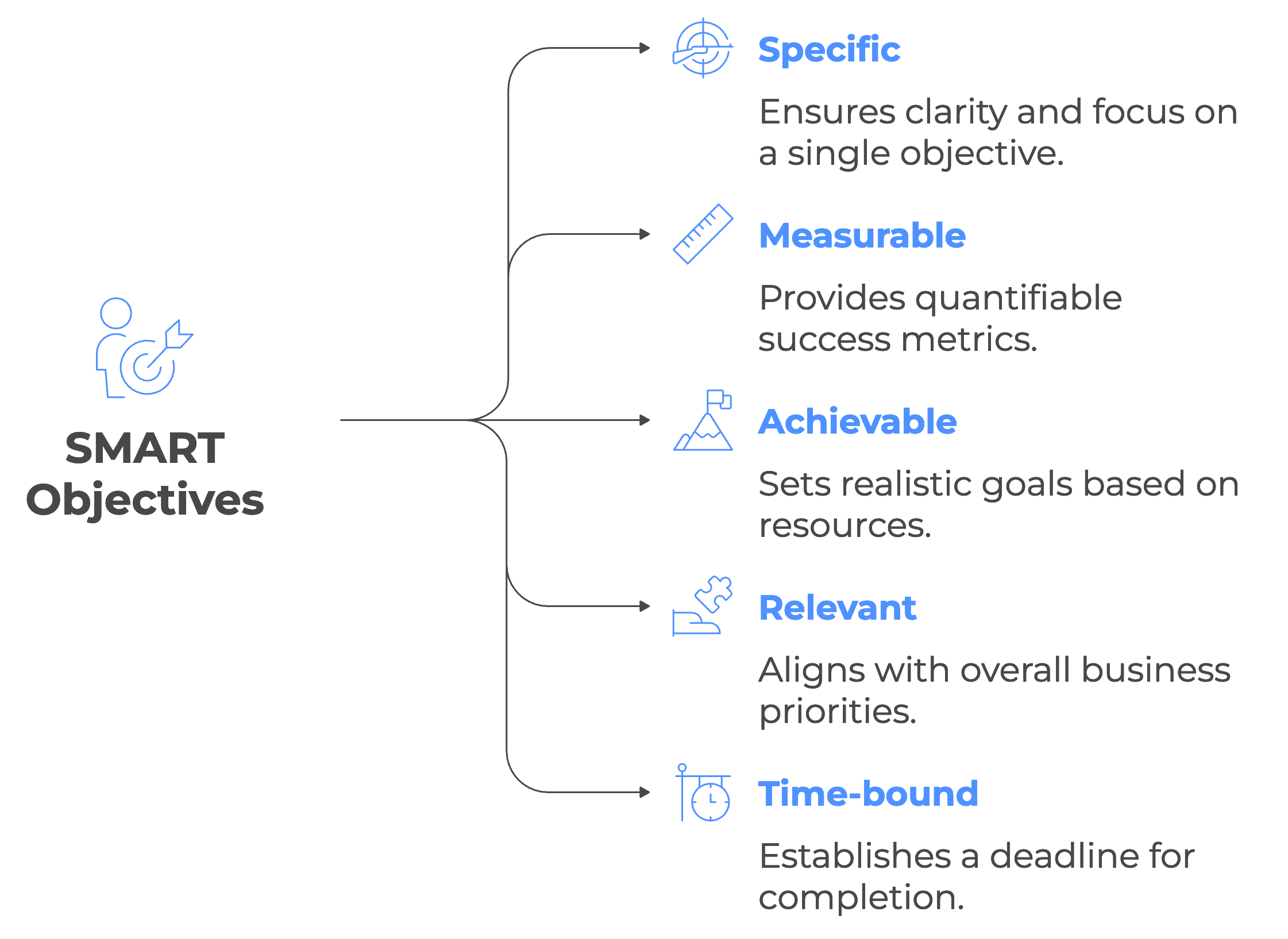
SMART stands for Specific, Measurable, Achievable, Relevant, and Time-bound. These five principles turn vague ambitions into actionable targets that can guide and evaluate marketing success.
SWOT Analysis
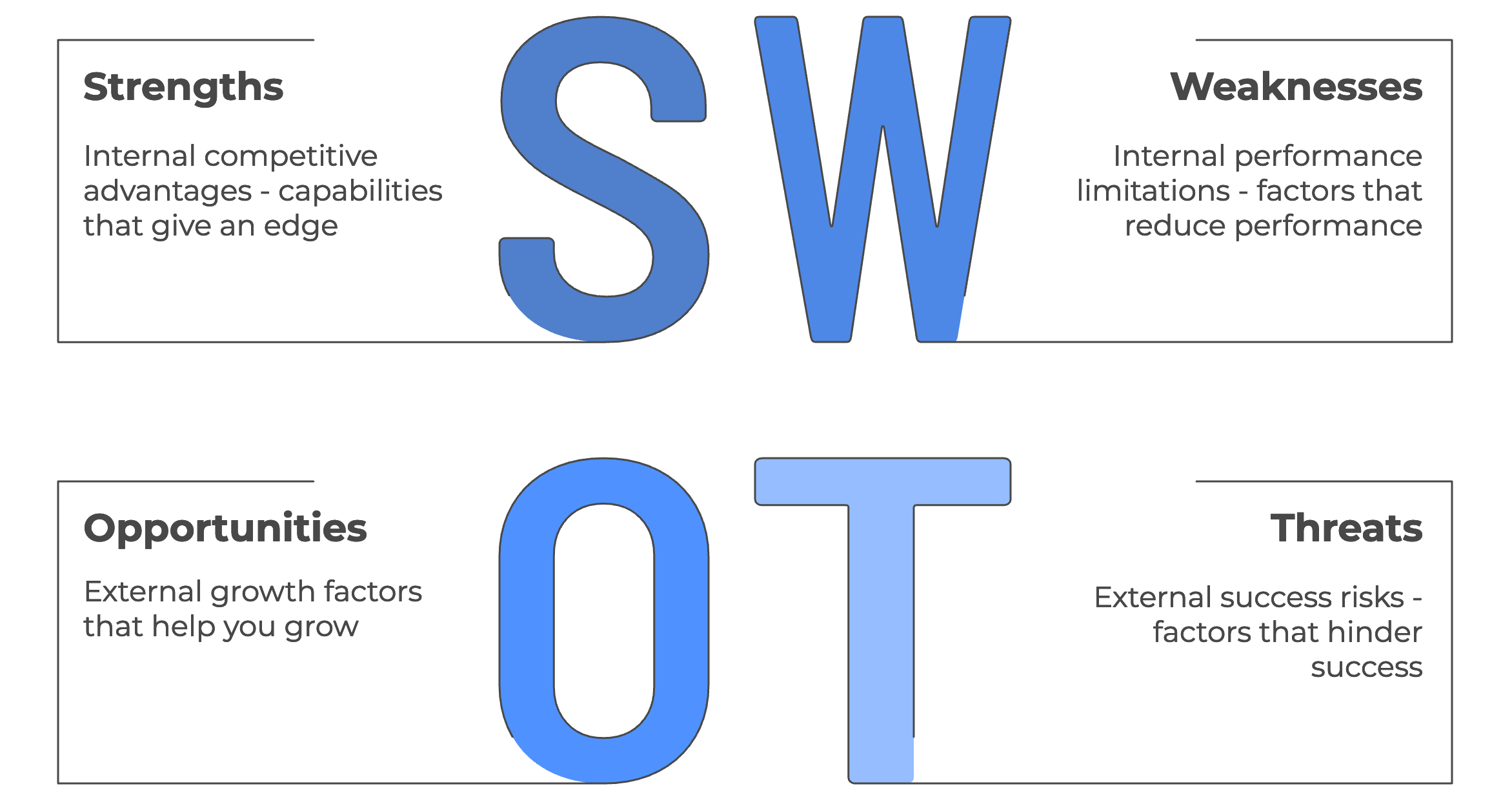
It identifies the key internal and external factors that shape your marketing strategy.
-
Strengths and Weaknesses = Internal → under your control;
-
Opportunities and Threats = External → influenced by the market.
Align every goal with a measurable outcome and a timeline.
Use SWOT insights to prioritize goals that are realistic yet growth-driven.
Example Flow
"Low conversion rate" (Weakness) ➜ "Improve landing page UX" (Specific) ➜ "+20% conversions in 3 months" (SMART Goal)
Choosing the Right Channels Based on Audience, Competitors, and Goals
Target Audience (TA) is the specific group of people most likely to need or want your product or service. Understanding who they are helps you choose the right channels, tone, and content style.
Key Factors for Identifying a Target Audience
- Demographics: age, gender, income, location, education;
- Psychographics: interests, values, opinions, lifestyle;
- Behavioral Data: buying habits, brand interactions, online activity;
- Needs and Pain Points: what problems your product solves.
Targeting everyone often means connecting with no one. Narrow focus leads to stronger engagement.
The Buyer Persona
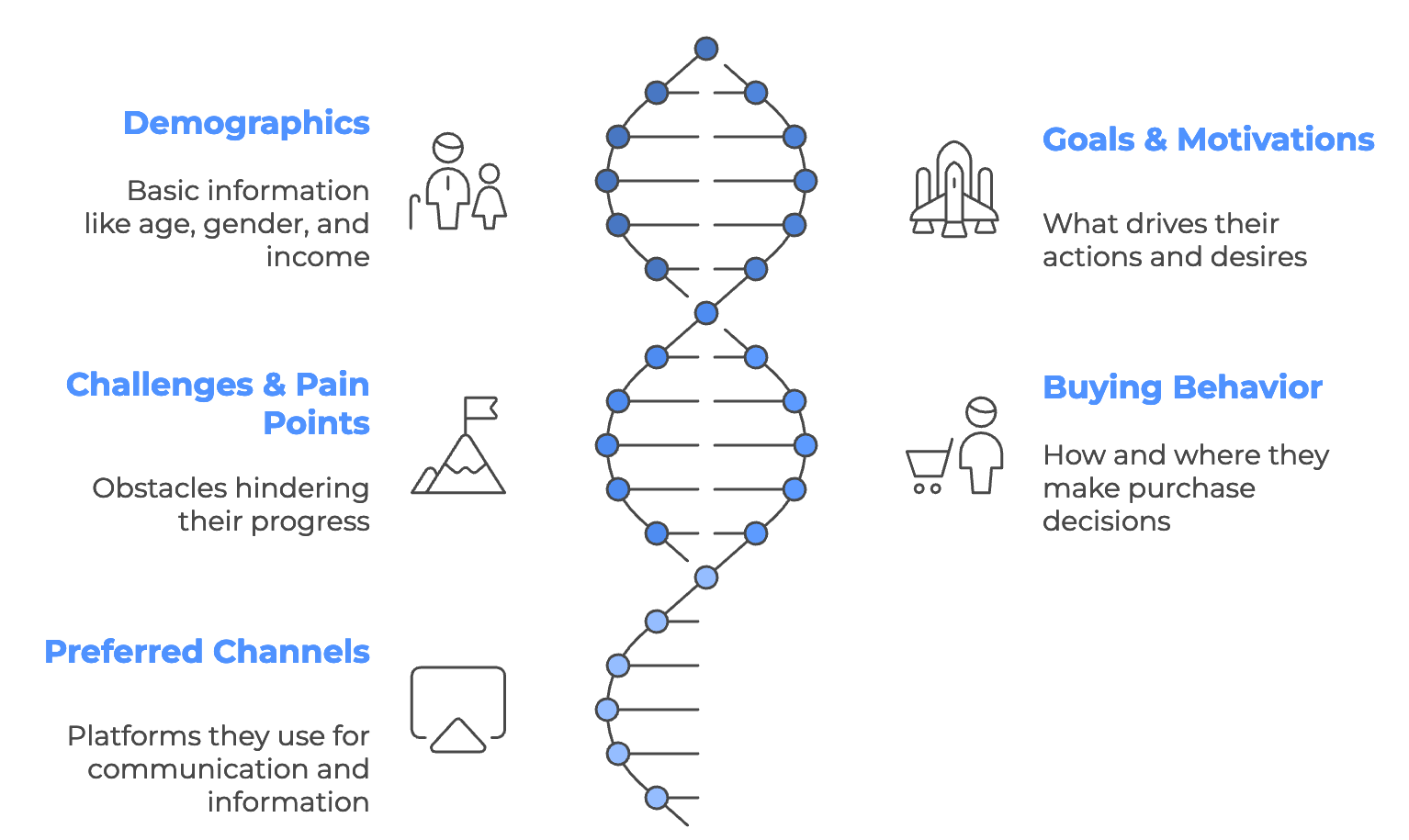
A buyer persona is a semi-fictional representation of your ideal customer, based on research and real data.
Personas help marketers visualize and humanize the people behind the analytics — turning numbers into personalities and stories.
The DNA of a Buyer Persona
Create 2–3 core personas per campaign to avoid over-segmentation.
Regularly update personas based on new analytics and feedback.
Use tools like Google Analytics, Meta Audience Insights, or HubSpot Persona Templates to validate data.
1. In SWOT analysis, which category represents external factors that could help a business grow?
2. Select two examples of measurable digital marketing goals:
3. Match each SMART component with its correct description:
4. Match each persona-building step with its corresponding focus:
Tack för dina kommentarer!
Fråga AI
Fråga AI
Fråga vad du vill eller prova någon av de föreslagna frågorna för att starta vårt samtal
How do I create an effective SWOT analysis for my business?
What are some examples of SMART marketing objectives?
How do I identify and build a buyer persona for my campaign?
Fantastiskt!
Completion betyg förbättrat till 2.13
Channels & the Customer Journey
Svep för att visa menyn
Setting Clear Marketing Objectives
SMART stands for Specific, Measurable, Achievable, Relevant, and Time-bound. These five principles turn vague ambitions into actionable targets that can guide and evaluate marketing success.
SWOT Analysis
It identifies the key internal and external factors that shape your marketing strategy.
-
Strengths and Weaknesses = Internal → under your control;
-
Opportunities and Threats = External → influenced by the market.
Align every goal with a measurable outcome and a timeline.
Use SWOT insights to prioritize goals that are realistic yet growth-driven.
Example Flow
"Low conversion rate" (Weakness) ➜ "Improve landing page UX" (Specific) ➜ "+20% conversions in 3 months" (SMART Goal)
Choosing the Right Channels Based on Audience, Competitors, and Goals
Target Audience (TA) is the specific group of people most likely to need or want your product or service. Understanding who they are helps you choose the right channels, tone, and content style.
Key Factors for Identifying a Target Audience
- Demographics: age, gender, income, location, education;
- Psychographics: interests, values, opinions, lifestyle;
- Behavioral Data: buying habits, brand interactions, online activity;
- Needs and Pain Points: what problems your product solves.
Targeting everyone often means connecting with no one. Narrow focus leads to stronger engagement.
The Buyer Persona
A buyer persona is a semi-fictional representation of your ideal customer, based on research and real data.
Personas help marketers visualize and humanize the people behind the analytics — turning numbers into personalities and stories.
The DNA of a Buyer Persona
Create 2–3 core personas per campaign to avoid over-segmentation.
Regularly update personas based on new analytics and feedback.
Use tools like Google Analytics, Meta Audience Insights, or HubSpot Persona Templates to validate data.
1. In SWOT analysis, which category represents external factors that could help a business grow?
2. Select two examples of measurable digital marketing goals:
3. Match each SMART component with its correct description:
4. Match each persona-building step with its corresponding focus:
Tack för dina kommentarer!