 The History and Evolution of the Web
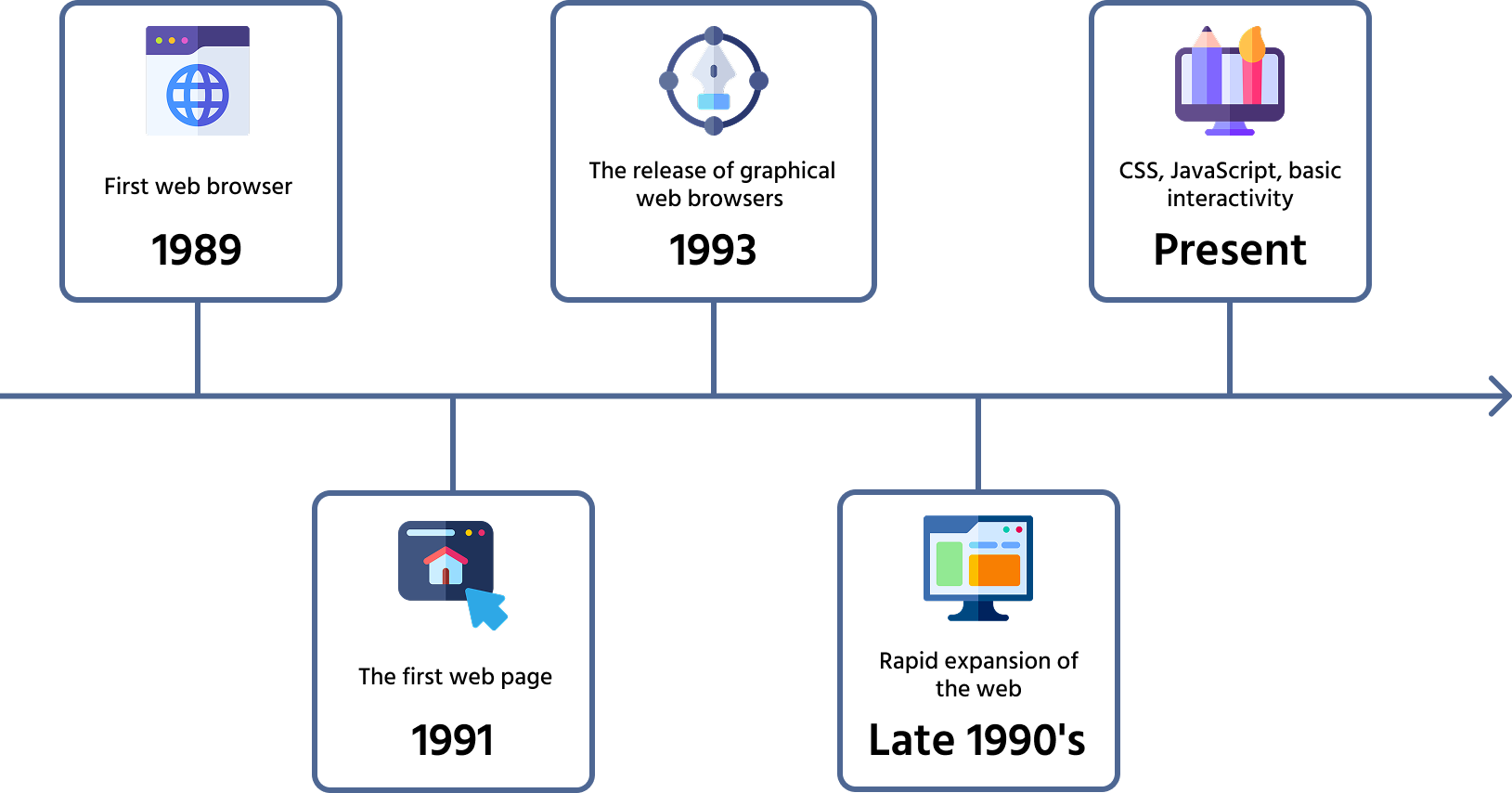
The World Wide Web was created by Sir Tim Berners-Lee at CERN in the late 1980s. Here's a brief timeline of how it developed:
- 1989: Berners-Lee proposes the idea of the Web and builds the first browser and server.;
- 1991: The first web page was created, consisting of text and hyperlinks. This marked the beginning of the web as we know it today;
- 1993: Graphical browsers like Mosaic and later Netscape Navigator help the Web spread beyond universities;
- Mid to late 1990s: The dot-com boom led to a rapid expansion of the web. Businesses began establishing an online presence, and e-commerce emerged as a significant aspect of the web;
- 2000s to present: The web continued to evolve with the introduction of dynamic web technologies such as CSS (Cascading Style Sheets), JavaScript, and server-side scripting languages. Social media platforms, cloud computing, and mobile devices have further transformed the web into an essential part of modern life.
Today
HTML remains the foundation of every web page. It organizes content and defines structure including the text and images you see right now.
When you visit a website, your browser sends a request to the server. The server returns the HTML file for that page, and the browser reads the HTML to display the page according to its structure and content.
Obrigado pelo seu feedback!
Pergunte à IA

Pergunte à IA

Pergunte o que quiser ou experimente uma das perguntas sugeridas para iniciar nosso bate-papo
Incrível!
Completion taxa melhorada para 2.86The History and Evolution of the Web
Deslize para mostrar o menu
The World Wide Web was created by Sir Tim Berners-Lee at CERN in the late 1980s. Here's a brief timeline of how it developed:
- 1989: Berners-Lee proposes the idea of the Web and builds the first browser and server.;
- 1991: The first web page was created, consisting of text and hyperlinks. This marked the beginning of the web as we know it today;
- 1993: Graphical browsers like Mosaic and later Netscape Navigator help the Web spread beyond universities;
- Mid to late 1990s: The dot-com boom led to a rapid expansion of the web. Businesses began establishing an online presence, and e-commerce emerged as a significant aspect of the web;
- 2000s to present: The web continued to evolve with the introduction of dynamic web technologies such as CSS (Cascading Style Sheets), JavaScript, and server-side scripting languages. Social media platforms, cloud computing, and mobile devices have further transformed the web into an essential part of modern life.
Today
HTML remains the foundation of every web page. It organizes content and defines structure including the text and images you see right now.
When you visit a website, your browser sends a request to the server. The server returns the HTML file for that page, and the browser reads the HTML to display the page according to its structure and content.
Obrigado pelo seu feedback!
