What You Can and Cannot Delegate to an Agent
Veeg om het menu te tonen
One of the most common mistakes people make when they start using agents is either delegating too little – treating the agent like a basic chatbot – or too much – trusting it with tasks that genuinely require human judgment. Getting this balance right is what separates people who save hours every week from people who feel like the technology is not working for them.
Tasks Agents Handle Well
Agents perform best on tasks that are:
- Repetitive and rule-based – the same process applied to different inputs, like summarizing a set of documents or formatting data from emails;
- Research-heavy but low-stakes – gathering information, comparing options, compiling a first draft for you to review;
- Time-consuming but not complex – tasks that take you 30 minutes not because they are difficult but because there is a lot of material to get through.

A good rule of thumb: if you could hand this task to a capable intern with clear instructions, you can probably delegate it to an agent. If you would not trust an intern to make the final call on it, do not trust the agent either.
Tasks You Should Keep for Yourself
Agents struggle with tasks that require:
- Contextual judgment – decisions that depend on relationships, history, or organizational nuance that the agent does not have access to;
- Accountability – anything where a mistake has real consequences and someone needs to own the outcome;
- Creative direction – agents can produce content, but the strategic decisions about what to say and why should stay with you;
- Sensitive communication – emails or messages where tone, timing and relationship context matter significantly.

Delegation threshold – the point at which a task requires enough judgment, accountability or context that it should remain with a human rather than being handed to an agent.
A Practical Framework
Before delegating a task, ask yourself three questions:
- Can I write clear instructions for this task without needing to explain background context the agent does not have?
- If the agent gets this slightly wrong, what is the worst that happens?
- Will I review the output before it goes anywhere?
If your answers are yes, low risk, and yes – delegate it. If any answer gives you pause, stay involved in that step.
What About Tasks That are Partially Delegatable?
Many real tasks fall somewhere in the middle – the agent can do most of the work but needs a human checkpoint at a specific step. This is actually the most common and most useful pattern:
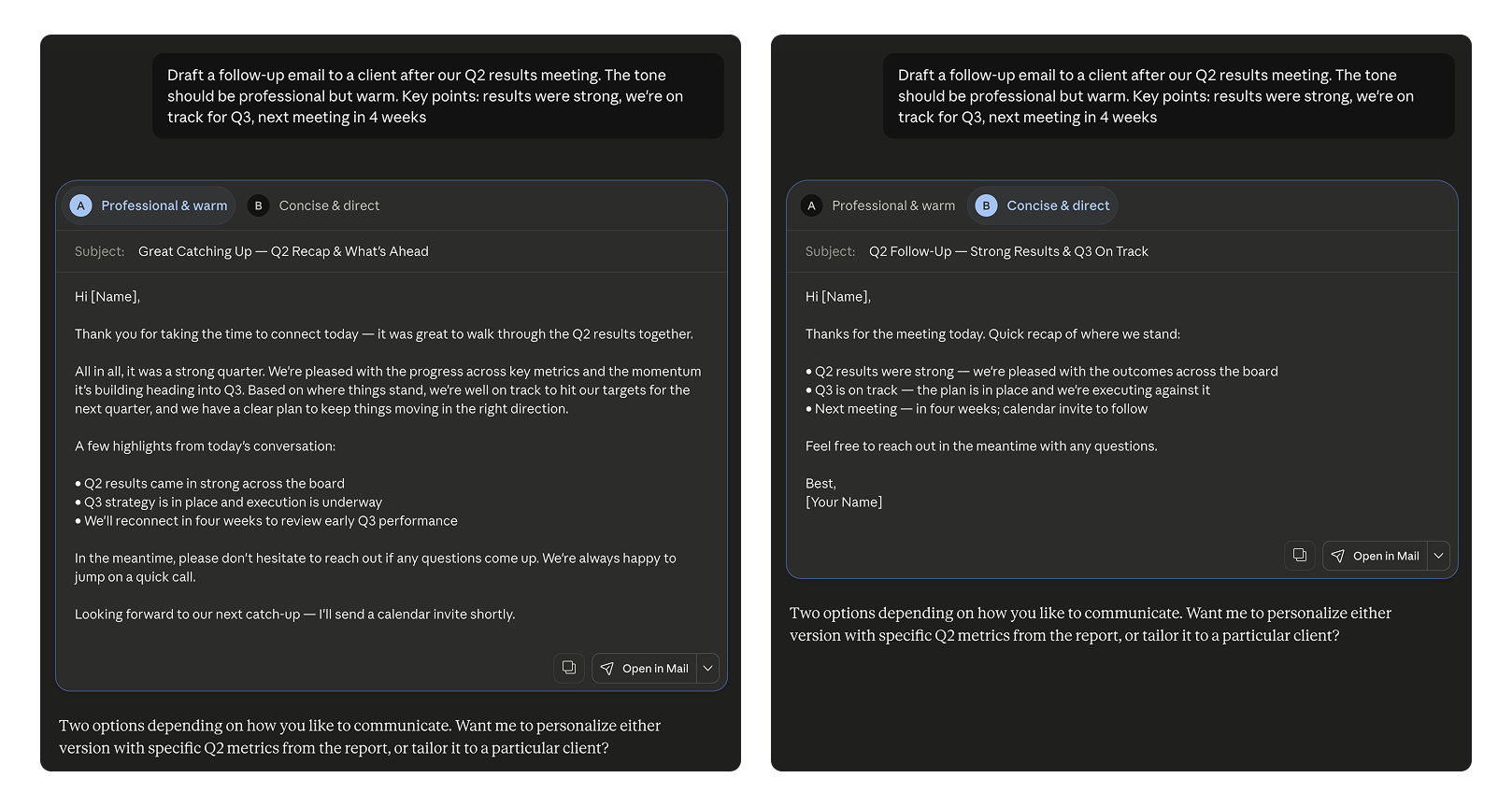
- Email drafting – the agent writes the draft, you review and adjust the tone before sending;
- Meeting prep – the agent summarizes the background materials, you decide what to prioritize in the conversation;
- Data analysis – the agent identifies patterns in the data, you interpret what they mean for your decision.
Think of these as human-agent collaboration rather than full delegation. The agent handles the volume, you handle the judgment.
Bedankt voor je feedback!
Vraag AI

Vraag AI

Vraag wat u wilt of probeer een van de voorgestelde vragen om onze chat te starten.
What You Can and Cannot Delegate to an Agent
One of the most common mistakes people make when they start using agents is either delegating too little – treating the agent like a basic chatbot – or too much – trusting it with tasks that genuinely require human judgment. Getting this balance right is what separates people who save hours every week from people who feel like the technology is not working for them.
Tasks Agents Handle Well
Agents perform best on tasks that are:
- Repetitive and rule-based – the same process applied to different inputs, like summarizing a set of documents or formatting data from emails;
- Research-heavy but low-stakes – gathering information, comparing options, compiling a first draft for you to review;
- Time-consuming but not complex – tasks that take you 30 minutes not because they are difficult but because there is a lot of material to get through.
A good rule of thumb: if you could hand this task to a capable intern with clear instructions, you can probably delegate it to an agent. If you would not trust an intern to make the final call on it, do not trust the agent either.
Tasks You Should Keep for Yourself
Agents struggle with tasks that require:
- Contextual judgment – decisions that depend on relationships, history, or organizational nuance that the agent does not have access to;
- Accountability – anything where a mistake has real consequences and someone needs to own the outcome;
- Creative direction – agents can produce content, but the strategic decisions about what to say and why should stay with you;
- Sensitive communication – emails or messages where tone, timing and relationship context matter significantly.
Delegation threshold – the point at which a task requires enough judgment, accountability or context that it should remain with a human rather than being handed to an agent.
A Practical Framework
Before delegating a task, ask yourself three questions:
- Can I write clear instructions for this task without needing to explain background context the agent does not have?
- If the agent gets this slightly wrong, what is the worst that happens?
- Will I review the output before it goes anywhere?
If your answers are yes, low risk, and yes – delegate it. If any answer gives you pause, stay involved in that step.
What About Tasks That are Partially Delegatable?
Many real tasks fall somewhere in the middle – the agent can do most of the work but needs a human checkpoint at a specific step. This is actually the most common and most useful pattern:
- Email drafting – the agent writes the draft, you review and adjust the tone before sending;
- Meeting prep – the agent summarizes the background materials, you decide what to prioritize in the conversation;
- Data analysis – the agent identifies patterns in the data, you interpret what they mean for your decision.
Think of these as human-agent collaboration rather than full delegation. The agent handles the volume, you handle the judgment.
Bedankt voor je feedback!
