Batches
メニューを表示するにはスワイプしてください
Batches in Data Processing
When training a machine learning model, it's common to feed the data in small chunks rather than all at once. These chunks are called "batches". Instead of showing a model a single data item (like one image or one sentence), we might feed it a batch of, say, 32 items together. This approach can make training more stable and faster.
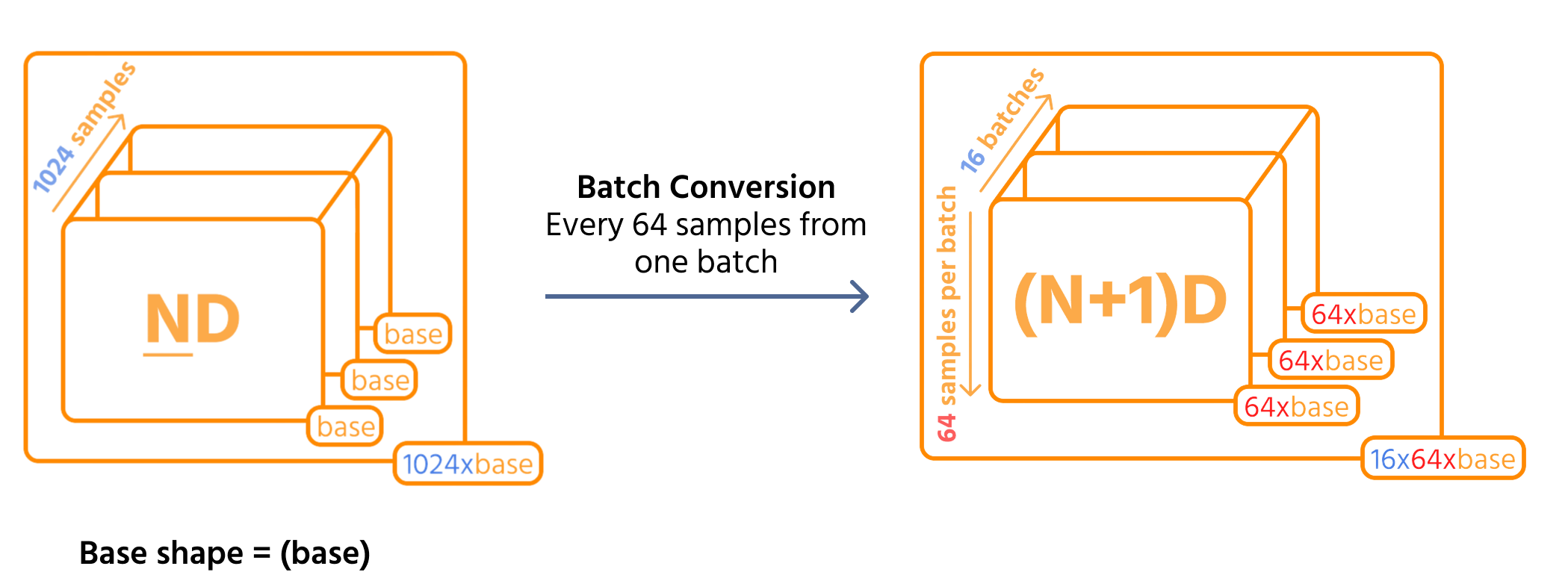
When thinking about tensors, this means adding an extra dimension at the beginning. So, if a single item's data was represented by a tensor of shape (height, width), a batch of these items would have the shape (batch_size, height, width). In this example, if the batch size is 32, the shape becomes (32, height, width).
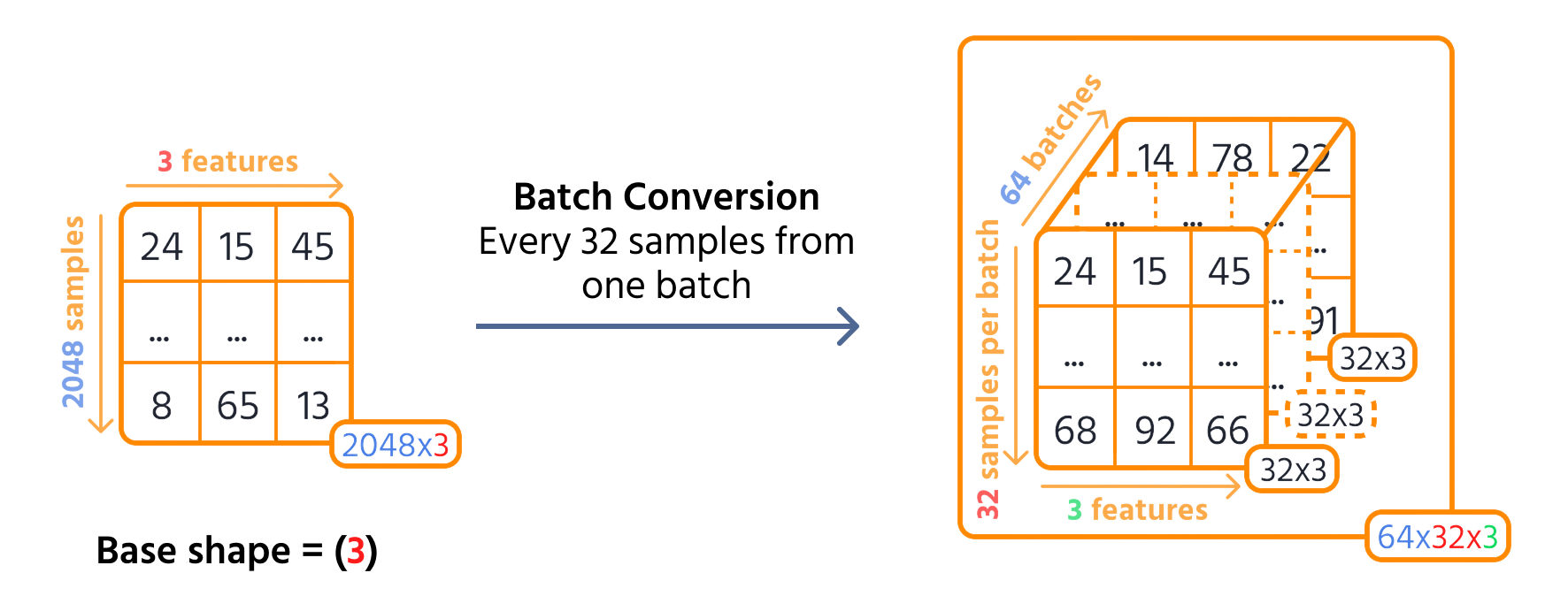
Let's say we have 2048 data samples, each with a shape of (base shape). This gives us a tensor of (2048, base shape). If we break this data into batches of 32 samples, we'll end up with 64 batches, as 64 * 32 = 2048. And the new shape will be (64, 32, base shape).
When designing your own neural network or another model, you can employ different shapes for the tasks mentioned above. However, these shaping techniques are standard in Tensorflow, as they are structured both logically and hierarchically to optimize the performance of learning algorithms.
フィードバックありがとうございます!
AIに質問する

AIに質問する

何でも質問するか、提案された質問の1つを試してチャットを始めてください
Batches
Batches in Data Processing
When training a machine learning model, it's common to feed the data in small chunks rather than all at once. These chunks are called "batches". Instead of showing a model a single data item (like one image or one sentence), we might feed it a batch of, say, 32 items together. This approach can make training more stable and faster.
When thinking about tensors, this means adding an extra dimension at the beginning. So, if a single item's data was represented by a tensor of shape (height, width), a batch of these items would have the shape (batch_size, height, width). In this example, if the batch size is 32, the shape becomes (32, height, width).
Let's say we have 2048 data samples, each with a shape of (base shape). This gives us a tensor of (2048, base shape). If we break this data into batches of 32 samples, we'll end up with 64 batches, as 64 * 32 = 2048. And the new shape will be (64, 32, base shape).
When designing your own neural network or another model, you can employ different shapes for the tasks mentioned above. However, these shaping techniques are standard in Tensorflow, as they are structured both logically and hierarchically to optimize the performance of learning algorithms.
フィードバックありがとうございます!
