セクション 2. 章 4

single
K-Medoids and the Weather Data
メニューを表示するにはスワイプしてください
As you can see, there was no such clear peek as in the example. That means that both 3 and 4 clusters may be a good choice!
Let's see what will be the result of using the K-Medoids algorithm for the weather data we used in the previous section. Let's start with defining the optimal number of clusters.
タスク
スワイプしてコーディングを開始
Given cities' average temperatures dataset data. The numerical columns are 3 - 14.
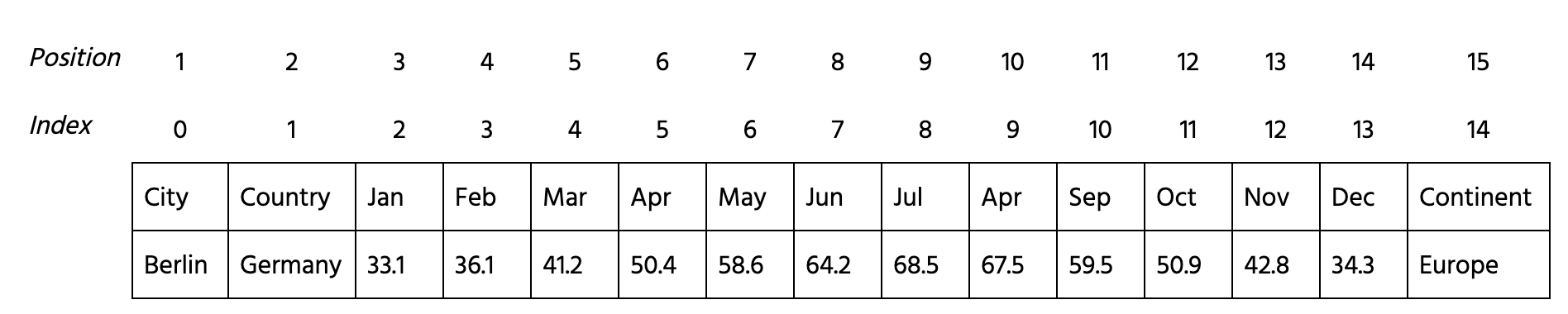
Your tasks are:
- Using
forloop iterate overn_cl. Within the loop:
- Create
KMedoidsmodel withjclusters namedmodel. - Fit the 2-15 columns of
datato the model. Watch out that indices in Python start from 0. - Add silhouette score value to the
silhouetteslist. Remember to pass two parameters: the data used for fitting (the same 3-15 columns) and predicted bymodellabels.
- Visualize the results using
lineplotofsns. Passn_clasxparameter andsilhouettesasy. Do not forget to apply the.show()method to display the plot.
解答
 実践的な練習のためにデスクトップに切り替える下記のオプションのいずれかを利用して、現在の場所から続行する
すべて明確でしたか?
フィードバックありがとうございます!
セクション 2. 章 4
single
AIに質問する

AIに質問する

何でも質問するか、提案された質問の1つを試してチャットを始めてください
