Sezione 2. Capitolo 4

single
K-Medoids and the Weather Data
Scorri per mostrare il menu
As you can see, there was no such clear peek as in the example. That means that both 3 and 4 clusters may be a good choice!
Let's see what will be the result of using the K-Medoids algorithm for the weather data we used in the previous section. Let's start with defining the optimal number of clusters.
Compito
Scorri per iniziare a programmare
Given cities' average temperatures dataset data. The numerical columns are 3 - 14.
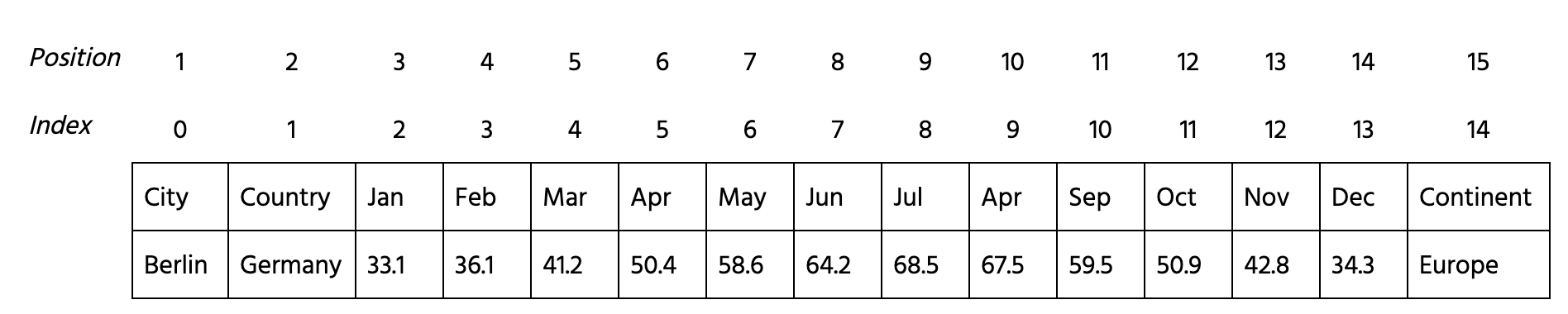
Your tasks are:
- Using
forloop iterate overn_cl. Within the loop:
- Create
KMedoidsmodel withjclusters namedmodel. - Fit the 2-15 columns of
datato the model. Watch out that indices in Python start from 0. - Add silhouette score value to the
silhouetteslist. Remember to pass two parameters: the data used for fitting (the same 3-15 columns) and predicted bymodellabels.
- Visualize the results using
lineplotofsns. Passn_clasxparameter andsilhouettesasy. Do not forget to apply the.show()method to display the plot.
Soluzione
 Cambia al desktop per esercitarti nel mondo realeContinua da dove ti trovi utilizzando una delle opzioni seguenti
Tutto è chiaro?
Grazie per i tuoi commenti!
Sezione 2. Capitolo 4
single
Chieda ad AI

Chieda ad AI

Chieda pure quello che desidera o provi una delle domande suggerite per iniziare la nostra conversazione
