Ordre des Opérations
Glissez pour afficher le menu
Dans le cas où un seul opérateur est utilisé plusieurs fois, l'expression est évaluée de gauche à droite.
Pour les exemples, nous utiliserons les littéraux true et false pour plus de simplicité. Si nous avons une expression longue comme false || false || true || false, l'expression sera évaluée à partir de la gauche :

main.cs
123456789101112using System; namespace ConsoleApp { internal class Program { static void Main(string[] args) { Console.WriteLine(false || false || true || false); // Output: True } } }
L'ordre des opérateurs logiques est le suivant :
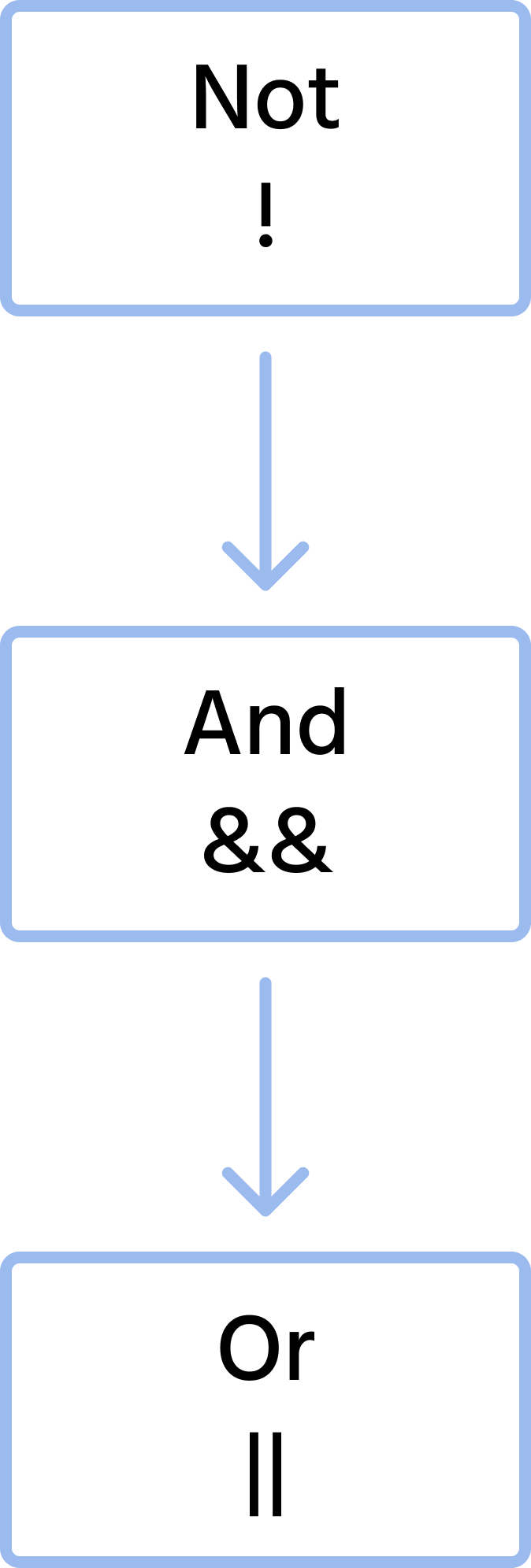
Voici un exemple plus complexe qui inclut plusieurs opérateurs différents. Il s'agit d'un bon exercice de lecture de code à lire et à essayer de comprendre :
main.cs
1234567891011121314151617181920using System; namespace ConsoleApp { internal class Program { static void Main(string[] args) { int x = 50; // We can store results of boolean / logical expressions in boolean variables or constants. bool inRange = (1 <= x) && (x <= 10) || (90 <= x) && (x <= 100); Console.WriteLine($"The value {x} is in the range 1-10 or 90-100: {inRange}"); // Output: False x = 99; inRange = (1 <= x) && (x <= 10) || (90 <= x) && (x <= 100); Console.WriteLine($"The value {x} is in the range 1-10 or 90-100: {inRange}"); // Output: True } } }
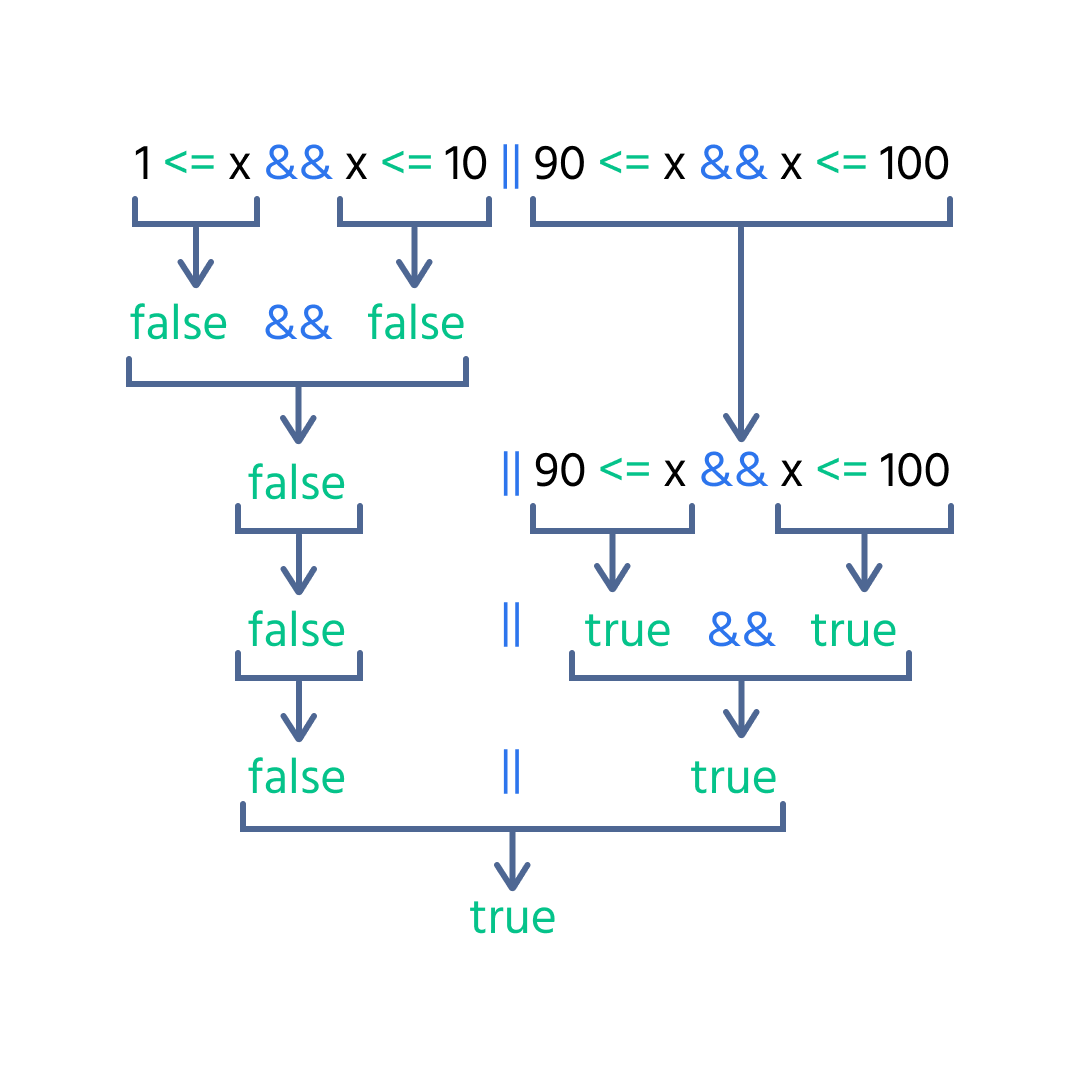
Dans le code ci-dessus, nous avons l'expression (1 <= x) && (x <= 10) || (90 <= x) && (x <= 100), qui vérifie si x se trouve dans l'intervalle 1-10 ou 90-100.
En tenant compte de la priorité des opérateurs, l'expression sera évaluée comme suit :
Merci pour vos commentaires !
Demandez à l'IA

Demandez à l'IA

Posez n'importe quelle question ou essayez l'une des questions suggérées pour commencer notre discussion
