Captura y Manejo de Excepciones
Desliza para mostrar el menú
Cuando se trabaja con operaciones de archivos u otro código que podría encontrar errores, el manejo estructurado de errores de Python mediante los bloques try, except, else y finally es fundamental para escribir programas resilientes. El bloque try contiene el código que podría generar una excepción. Si ocurre una excepción, se ejecuta el bloque except, lo que permite gestionar el error de manera adecuada. Si no se produce ninguna excepción, se ejecuta el bloque else, lo que lo convierte en un buen lugar para el código que solo debe ejecutarse cuando todo en el bloque try tiene éxito. El bloque finally siempre se ejecuta, independientemente de si ocurrió una excepción, por lo que es ideal para acciones de limpieza como cerrar archivos o liberar recursos. Como se mostró en el video, esta estructura ayuda a separar la lógica normal, el manejo de errores y la limpieza, lo que da como resultado un código más claro y seguro.
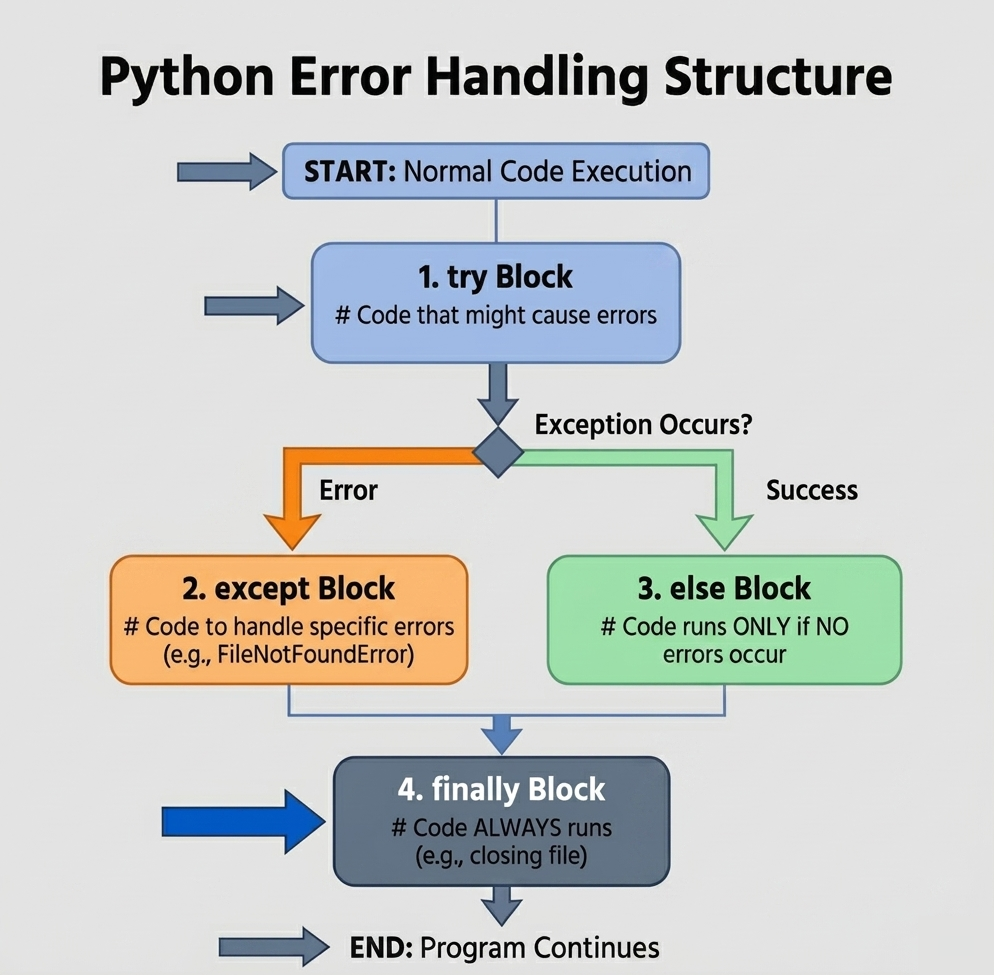
Bloques de manejo de errores en Python
- El bloque
trycontiene el código que podría generar una excepción; - El bloque
exceptcaptura y gestiona las excepciones si ocurren; - El bloque
elsese ejecuta solo si no se generó ninguna excepción en el bloquetry; - El bloque
finallysiempre se ejecuta, haya ocurrido o no una excepción.
123456789101112131415filename = "example.txt" try: file = open(filename, "w") file.write("Hello, Python error handling!") except OSError as e: print("An error occurred while writing to the file:", e) else: print("File written successfully.") finally: try: file.close() print("File closed.") except Exception: print("File was never opened or already closed.")
Esta estructura permite separar la lógica normal, el manejo de errores y las tareas de limpieza. Utiliza try para el código riesgoso, except para gestionar errores, else para finalizaciones exitosas y finally para acciones que siempre deben ejecutarse, como cerrar archivos o liberar recursos.
¡Gracias por tus comentarios!
Pregunte a AI

Pregunte a AI

Pregunte lo que quiera o pruebe una de las preguntas sugeridas para comenzar nuestra charla
Captura y Manejo de Excepciones
Cuando se trabaja con operaciones de archivos u otro código que podría encontrar errores, el manejo estructurado de errores de Python mediante los bloques try, except, else y finally es fundamental para escribir programas resilientes. El bloque try contiene el código que podría generar una excepción. Si ocurre una excepción, se ejecuta el bloque except, lo que permite gestionar el error de manera adecuada. Si no se produce ninguna excepción, se ejecuta el bloque else, lo que lo convierte en un buen lugar para el código que solo debe ejecutarse cuando todo en el bloque try tiene éxito. El bloque finally siempre se ejecuta, independientemente de si ocurrió una excepción, por lo que es ideal para acciones de limpieza como cerrar archivos o liberar recursos. Como se mostró en el video, esta estructura ayuda a separar la lógica normal, el manejo de errores y la limpieza, lo que da como resultado un código más claro y seguro.
Bloques de manejo de errores en Python
- El bloque
trycontiene el código que podría generar una excepción; - El bloque
exceptcaptura y gestiona las excepciones si ocurren; - El bloque
elsese ejecuta solo si no se generó ninguna excepción en el bloquetry; - El bloque
finallysiempre se ejecuta, haya ocurrido o no una excepción.
123456789101112131415filename = "example.txt" try: file = open(filename, "w") file.write("Hello, Python error handling!") except OSError as e: print("An error occurred while writing to the file:", e) else: print("File written successfully.") finally: try: file.close() print("File closed.") except Exception: print("File was never opened or already closed.")
Esta estructura permite separar la lógica normal, el manejo de errores y las tareas de limpieza. Utiliza try para el código riesgoso, except para gestionar errores, else para finalizaciones exitosas y finally para acciones que siempre deben ejecutarse, como cerrar archivos o liberar recursos.
¡Gracias por tus comentarios!
