Reihenfolge der Operationen
Swipe um das Menü anzuzeigen
Wenn nur ein Operator mehrfach verwendet wird, wird der Ausdruck von links nach rechts ausgewertet.
Für die Beispiele verwenden wir der Einfachheit halber die Literale true und false. Wenn wir einen langen Ausdruck wie false || false || true || false haben, wird der Ausdruck von der linken Seite ausgewertet:

main.cs
123456789101112using System; namespace ConsoleApp { internal class Program { static void Main(string[] args) { Console.WriteLine(false || false || true || false); // Output: True } } }
Die Reihenfolge der logischen Operatoren ist wie folgt:
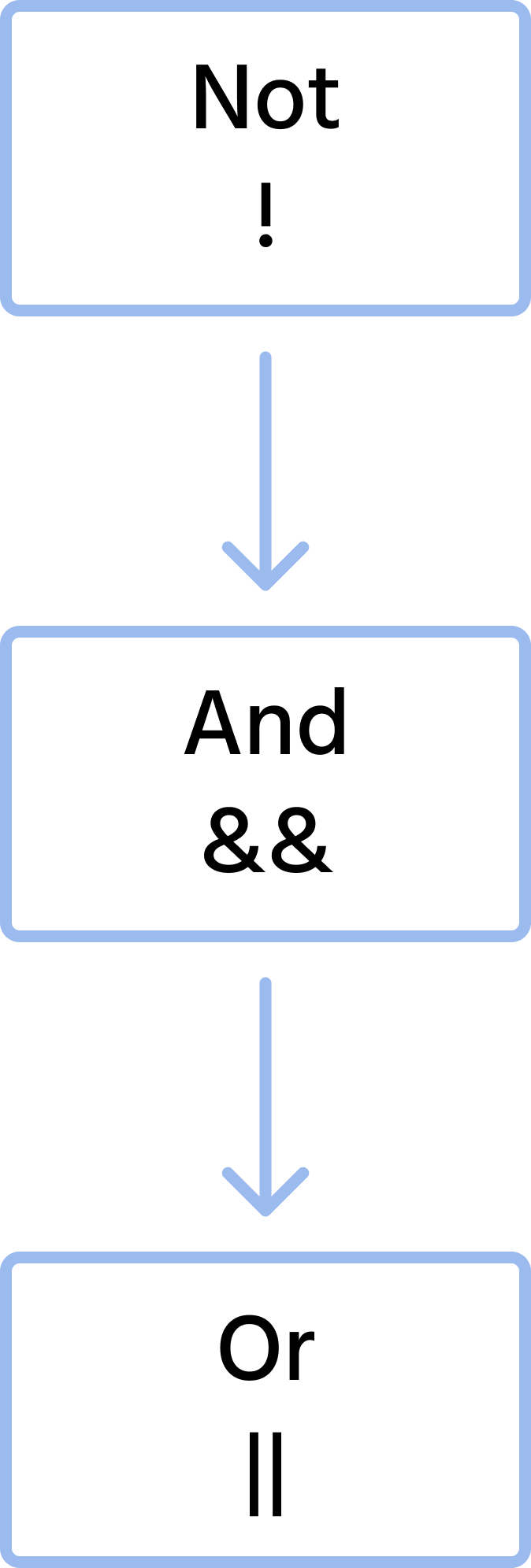
Im Folgenden befindet sich ein komplexeres Beispiel, das mehrere verschiedene Operatoren enthält. Es eignet sich gut als Übung zum Lesen und Verstehen von Code:
main.cs
1234567891011121314151617181920using System; namespace ConsoleApp { internal class Program { static void Main(string[] args) { int x = 50; // We can store results of boolean / logical expressions in boolean variables or constants. bool inRange = (1 <= x) && (x <= 10) || (90 <= x) && (x <= 100); Console.WriteLine($"The value {x} is in the range 1-10 or 90-100: {inRange}"); // Output: False x = 99; inRange = (1 <= x) && (x <= 10) || (90 <= x) && (x <= 100); Console.WriteLine($"The value {x} is in the range 1-10 or 90-100: {inRange}"); // Output: True } } }
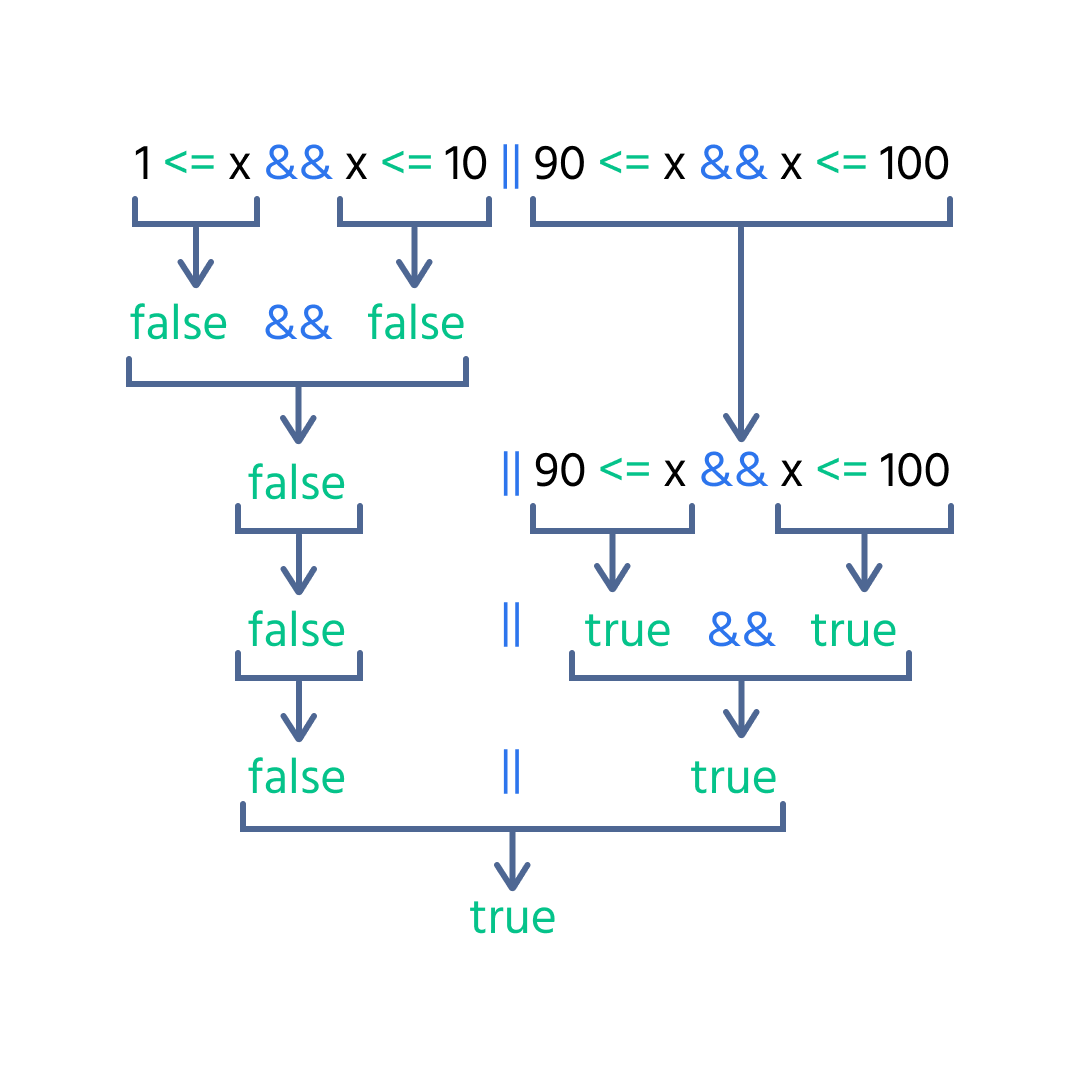
Im obigen Code haben wir den Ausdruck (1 <= x) && (x <= 10) || (90 <= x) && (x <= 100), der prüft, ob x im Bereich von 1-10 oder 90-100 liegt.
Unter Berücksichtigung der Operatorreihenfolge wird der Ausdruck wie folgt ausgewertet:
Danke für Ihr Feedback!
Fragen Sie AI

Fragen Sie AI

Fragen Sie alles oder probieren Sie eine der vorgeschlagenen Fragen, um unser Gespräch zu beginnen
