Understanding How Websites Work
A website is made up of different files that work together to create what you see in the browser. The three main components are HTML, CSS, and JavaScript, and each has its own job.
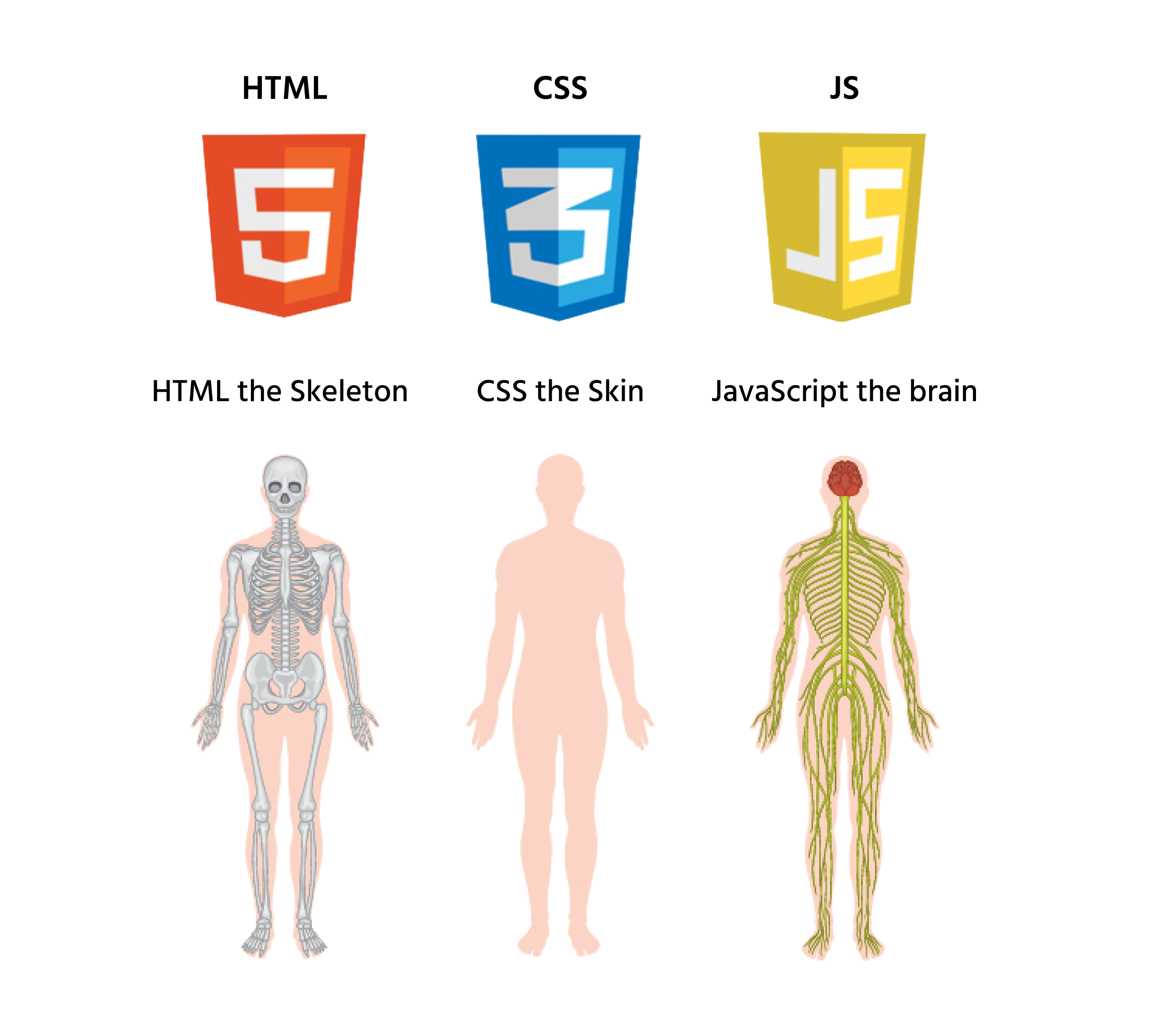
HTML File
HTML is the backbone of every webpage. If a website were a house, HTML is the bricks, the material used to build the structure. HTML defines text, images, buttons, links, and all the content that appears on the page.
CSS File
CSS is responsible for the visual appearance of the website. Continuing the house analogy, CSS is the paint, decorations, and design choices, the things that affect how the house looks. CSS allows you to change colors, style text, create layouts, add spacing, make elements visually appealing.
CSS takes the raw HTML content and makes it look good.
JavaScript File
JavaScript adds behavior and interactivity. In the house analogy, JavaScript is the electricity, appliances, and tools, the features that make the house functional. JavaScript lets websites respond to user actions, display interactive elements, update content dynamically, validate forms, animate elements.
Without JavaScript, a web page would remain static and non-interactive.
1. What are the three types of files commonly received from a server when accessing a website?
2. What is the purpose of HTML files in a website?
3. What is the purpose of CSS files in a website?
4. What is the purpose of JavaScript code in a website?
Thanks for your feedback!
Ask AI
Ask AI
Ask anything or try one of the suggested questions to begin our chat
Can you explain the differences between HTML, CSS, and JavaScript in more detail?
How do these three components work together on a website?
Can you give examples of what each component does on a real webpage?
Awesome!
Completion rate improved to 2.38
Understanding How Websites Work
Swipe to show menu
A website is made up of different files that work together to create what you see in the browser. The three main components are HTML, CSS, and JavaScript, and each has its own job.
HTML File
HTML is the backbone of every webpage. If a website were a house, HTML is the bricks, the material used to build the structure. HTML defines text, images, buttons, links, and all the content that appears on the page.
CSS File
CSS is responsible for the visual appearance of the website. Continuing the house analogy, CSS is the paint, decorations, and design choices, the things that affect how the house looks. CSS allows you to change colors, style text, create layouts, add spacing, make elements visually appealing.
CSS takes the raw HTML content and makes it look good.
JavaScript File
JavaScript adds behavior and interactivity. In the house analogy, JavaScript is the electricity, appliances, and tools, the features that make the house functional. JavaScript lets websites respond to user actions, display interactive elements, update content dynamically, validate forms, animate elements.
Without JavaScript, a web page would remain static and non-interactive.
1. What are the three types of files commonly received from a server when accessing a website?
2. What is the purpose of HTML files in a website?
3. What is the purpose of CSS files in a website?
4. What is the purpose of JavaScript code in a website?
Thanks for your feedback!