Marketing Strategies & Channel Integration
Swipe to show menu
Multi-Channel vs. Omni-Channel Marketing
Key Differences
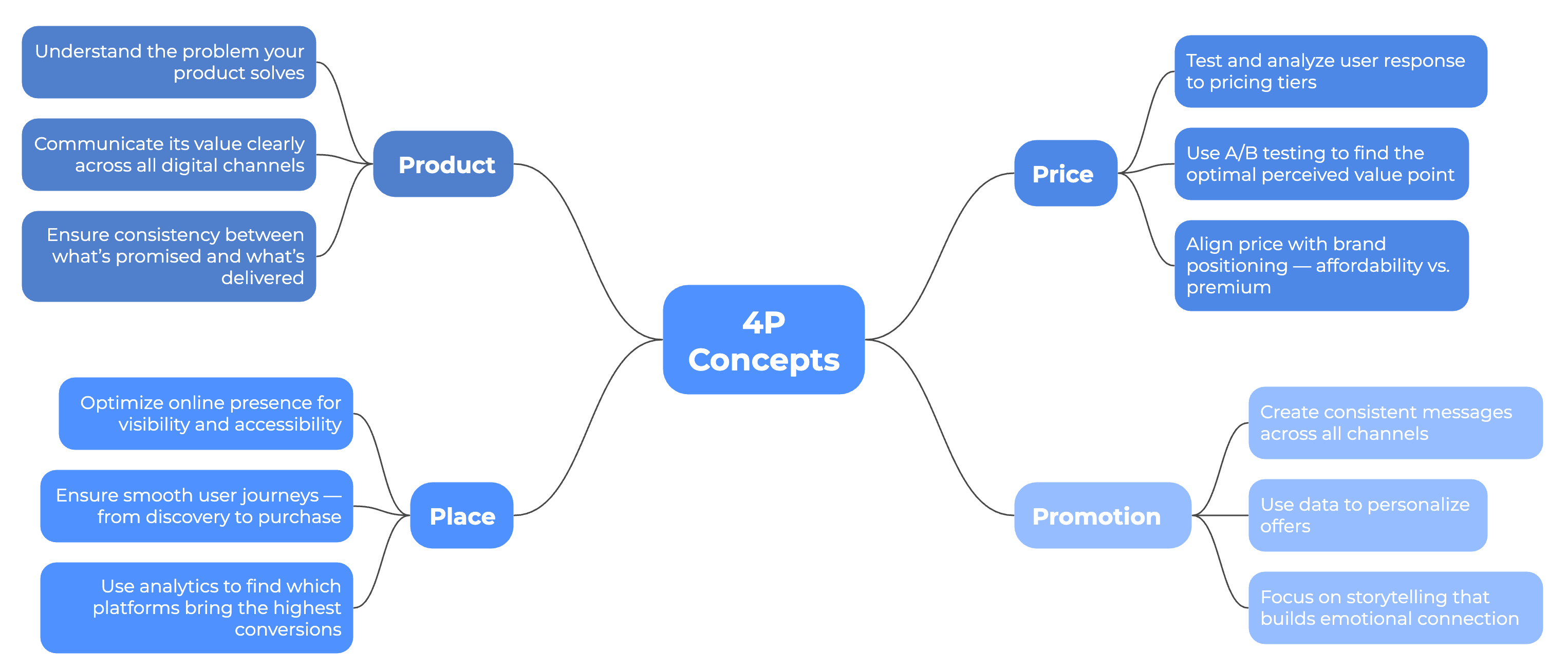
4P Concept
Integration with Traditional Marketing
Key traditional channels:
- Television & Radio: reach mass audiences and shape brand image;
- Print: builds credibility and depth (magazines, brochures);
- Events & Sponsorships: enable direct engagement and community trust;
- Outdoor Advertising: billboards and transit ads reinforce visibility.
Integration means every channel feeds into the next one, forming a seamless marketing loop.
Example 1: QR Code Funnel
-
TV commercial or printed poster includes a QR code;
-
QR links to a dedicated landing page;
-
Page captures lead data;
-
Automated email sequence nurtures the lead.
Example 2: Event Integration
-
Company sponsors an offline event or trade show;
-
Collects attendee details;
-
Follows up through LinkedIn messages, retargeting ads, or email campaigns.
1. Which of the following is most typical for a multi-channel approach?
2. Which two traits describe an omni-channel strategy?
3. Match each "P" with its modern digital interpretation:
4. What is the main advantage of combining traditional and digital marketing?
Thanks for your feedback!
Ask AI

Ask AI

Ask anything or try one of the suggested questions to begin our chat
Marketing Strategies & Channel Integration
Multi-Channel vs. Omni-Channel Marketing
Key Differences
4P Concept
Integration with Traditional Marketing
Key traditional channels:
- Television & Radio: reach mass audiences and shape brand image;
- Print: builds credibility and depth (magazines, brochures);
- Events & Sponsorships: enable direct engagement and community trust;
- Outdoor Advertising: billboards and transit ads reinforce visibility.
Integration means every channel feeds into the next one, forming a seamless marketing loop.
Example 1: QR Code Funnel
-
TV commercial or printed poster includes a QR code;
-
QR links to a dedicated landing page;
-
Page captures lead data;
-
Automated email sequence nurtures the lead.
Example 2: Event Integration
-
Company sponsors an offline event or trade show;
-
Collects attendee details;
-
Follows up through LinkedIn messages, retargeting ads, or email campaigns.
Thanks for your feedback!
