Ads Creatives Creation
Swipe to show menu
Crafting a Persuasive Message
An ad message must do three things:
- Grab attention — stop the scroll;
- Connect with needs — make the audience feel understood;
- Motivate action — inspire them to do something.
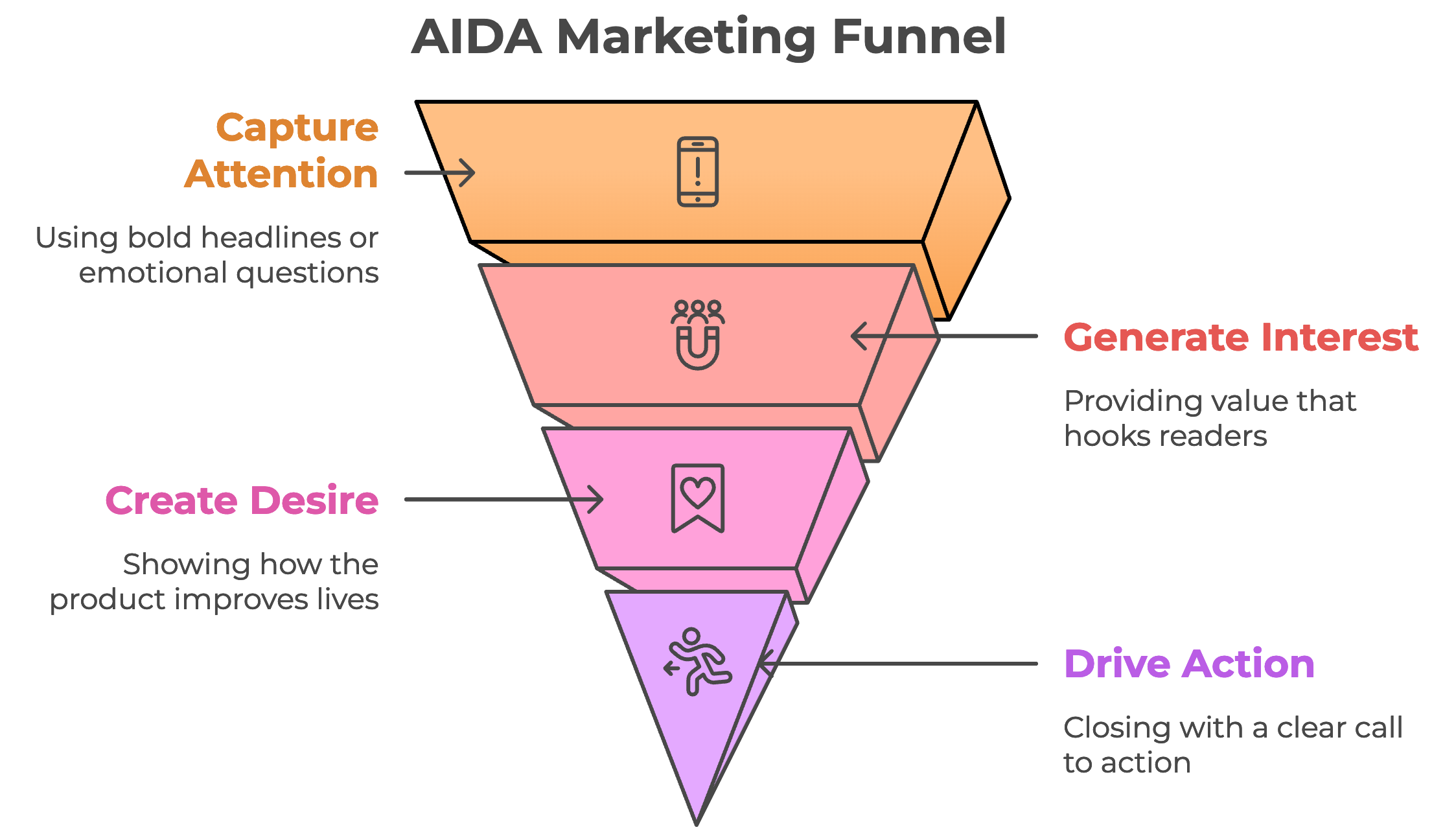
Five-Step Framework
- Hook Attention: use a strong, emotional or thought-provoking opener;
- Build Interest: offer clear value or a key benefit;
- Create Desire: show transformation through story or visualization;
- Speak to Pain Point: address frustration directly and show empathy;
- Add a Strong CTA: tell the user exactly what to do next.
The Power of Offers & Calls to Action (CTA)

A Call to Action (CTA) is a phrase or button that encourages users to take a specific action — such as signing up, purchasing, or learning more.
Main Types of CTAs
Writing Effective Ad Copy
Ad copy is the core of every campaign — it can determine whether an ad converts or gets ignored. Strong copy includes headlines, primary text, CTAs, and psychological triggers.
Headline:
- Short, clear, benefit-driven;
- Example: instead of "New Shoes Out Now", use "Run Faster, Feel Lighter – Try Our New Ultra-Light Sneakers!".
Primary Text:
- Hook with the first sentence (question, problem, solution);
- Use a friendly, relatable tone;
- Keep text concise, avoid long blocks.
CTA (Call-to-Action):
- Clear, action-driven phrases: "Shop Now", "Start Free Trial", "Get Yours Today";
- Avoid vague CTAs like "Click Here".
Psychological Triggers:
- Urgency/scarcity: "Only 5 left in stock";
- Social proof: "Join 10,000+ happy customers";
- Emotional connection: "Power up your morning with 20g of pure energy".

These principles apply not only to ads but also to emails, websites, and social posts.
Leveraging Social Proof & UGC
Social proof is the psychological phenomenon where people look to the actions and opinions of others to determine what is correct or trustworthy.
In advertising, social proof is shown through customer experiences, reviews, influencer partnerships, and user-generated content (UGC), all of which make a brand feel real and credible.
- Text-based Testimonials: short written quotes from real customers, often paired with names or photos;
- Video Testimonials: short clips showing customers sharing genuine experiences;
- Star Ratings: average customer ratings displayed directly in the ad;
- Third-Party Reviews: verified reviews from external platforms.
UGC refers to content created by customers themselves — photos, videos, or reviews shared publicly.
It's one of the most authentic and relatable forms of social proof because it showcases real experiences.
1. What is the main purpose of the AIDA model in advertising?
2. Why is user-generated content (UGC) highly effective in advertising?
3. Match each social proof element to its purpose:
Thanks for your feedback!
Ask AI

Ask AI

Ask anything or try one of the suggested questions to begin our chat
Ads Creatives Creation
Crafting a Persuasive Message
An ad message must do three things:
- Grab attention — stop the scroll;
- Connect with needs — make the audience feel understood;
- Motivate action — inspire them to do something.
Five-Step Framework
- Hook Attention: use a strong, emotional or thought-provoking opener;
- Build Interest: offer clear value or a key benefit;
- Create Desire: show transformation through story or visualization;
- Speak to Pain Point: address frustration directly and show empathy;
- Add a Strong CTA: tell the user exactly what to do next.
The Power of Offers & Calls to Action (CTA)
A Call to Action (CTA) is a phrase or button that encourages users to take a specific action — such as signing up, purchasing, or learning more.
Main Types of CTAs
Writing Effective Ad Copy
Ad copy is the core of every campaign — it can determine whether an ad converts or gets ignored. Strong copy includes headlines, primary text, CTAs, and psychological triggers.
Headline:
- Short, clear, benefit-driven;
- Example: instead of "New Shoes Out Now", use "Run Faster, Feel Lighter – Try Our New Ultra-Light Sneakers!".
Primary Text:
- Hook with the first sentence (question, problem, solution);
- Use a friendly, relatable tone;
- Keep text concise, avoid long blocks.
CTA (Call-to-Action):
- Clear, action-driven phrases: "Shop Now", "Start Free Trial", "Get Yours Today";
- Avoid vague CTAs like "Click Here".
Psychological Triggers:
- Urgency/scarcity: "Only 5 left in stock";
- Social proof: "Join 10,000+ happy customers";
- Emotional connection: "Power up your morning with 20g of pure energy".
These principles apply not only to ads but also to emails, websites, and social posts.
Leveraging Social Proof & UGC
Social proof is the psychological phenomenon where people look to the actions and opinions of others to determine what is correct or trustworthy.
In advertising, social proof is shown through customer experiences, reviews, influencer partnerships, and user-generated content (UGC), all of which make a brand feel real and credible.
- Text-based Testimonials: short written quotes from real customers, often paired with names or photos;
- Video Testimonials: short clips showing customers sharing genuine experiences;
- Star Ratings: average customer ratings displayed directly in the ad;
- Third-Party Reviews: verified reviews from external platforms.
UGC refers to content created by customers themselves — photos, videos, or reviews shared publicly.
It's one of the most authentic and relatable forms of social proof because it showcases real experiences.
Thanks for your feedback!
