Analytics by Channel
Web and SEO Analytics
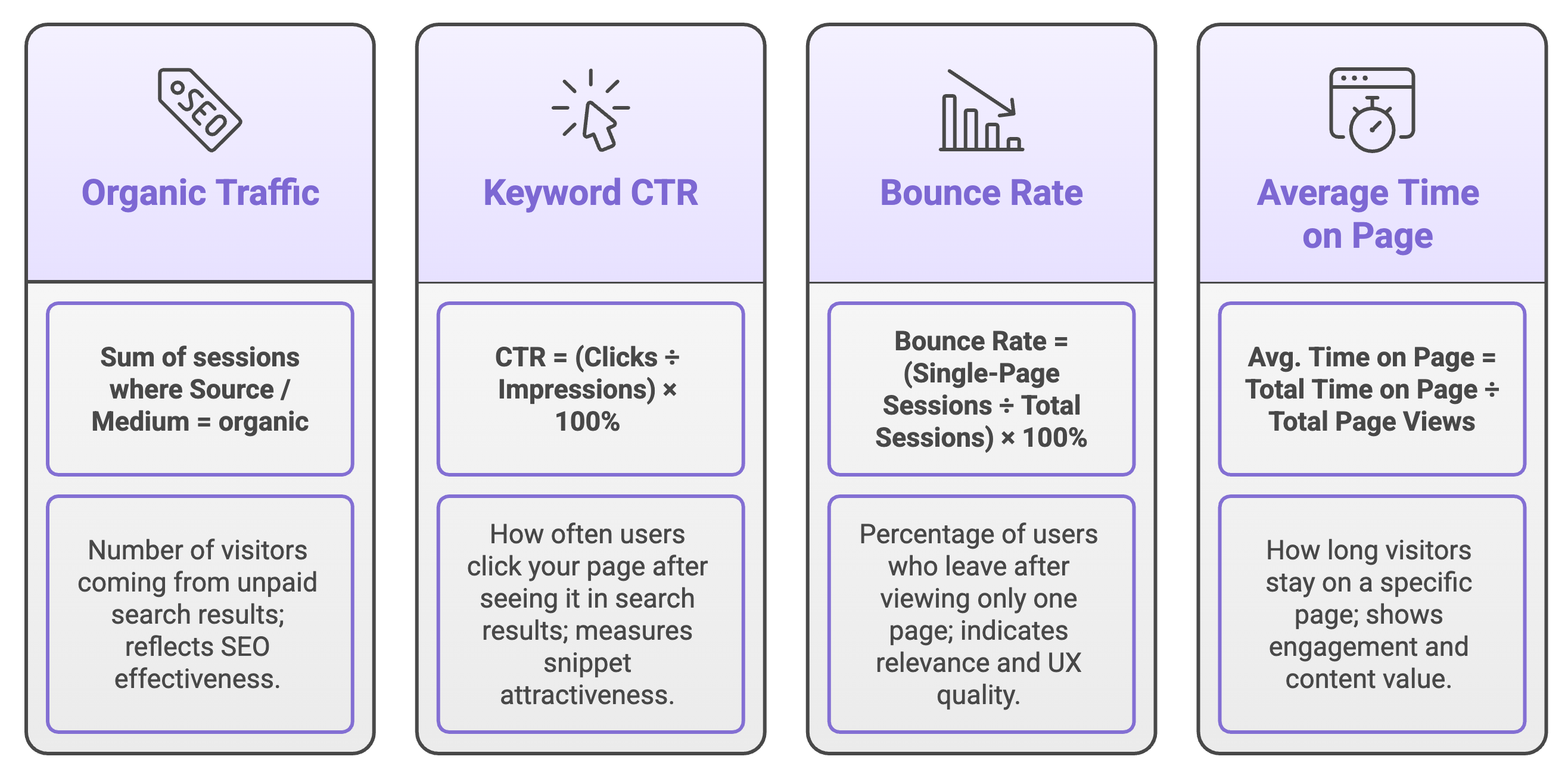
Web and SEO analytics give you deep visibility into how people find your site, what they care about, and where they drop off. By studying organic traffic, keyword performance, and user behavior, you can identify small improvements that lead to major growth. When combined with tools like Search Console and Semrush, analytics becomes a strategic system that reveals both where your website stands today and how to make it better tomorrow.
Social Media Analytics
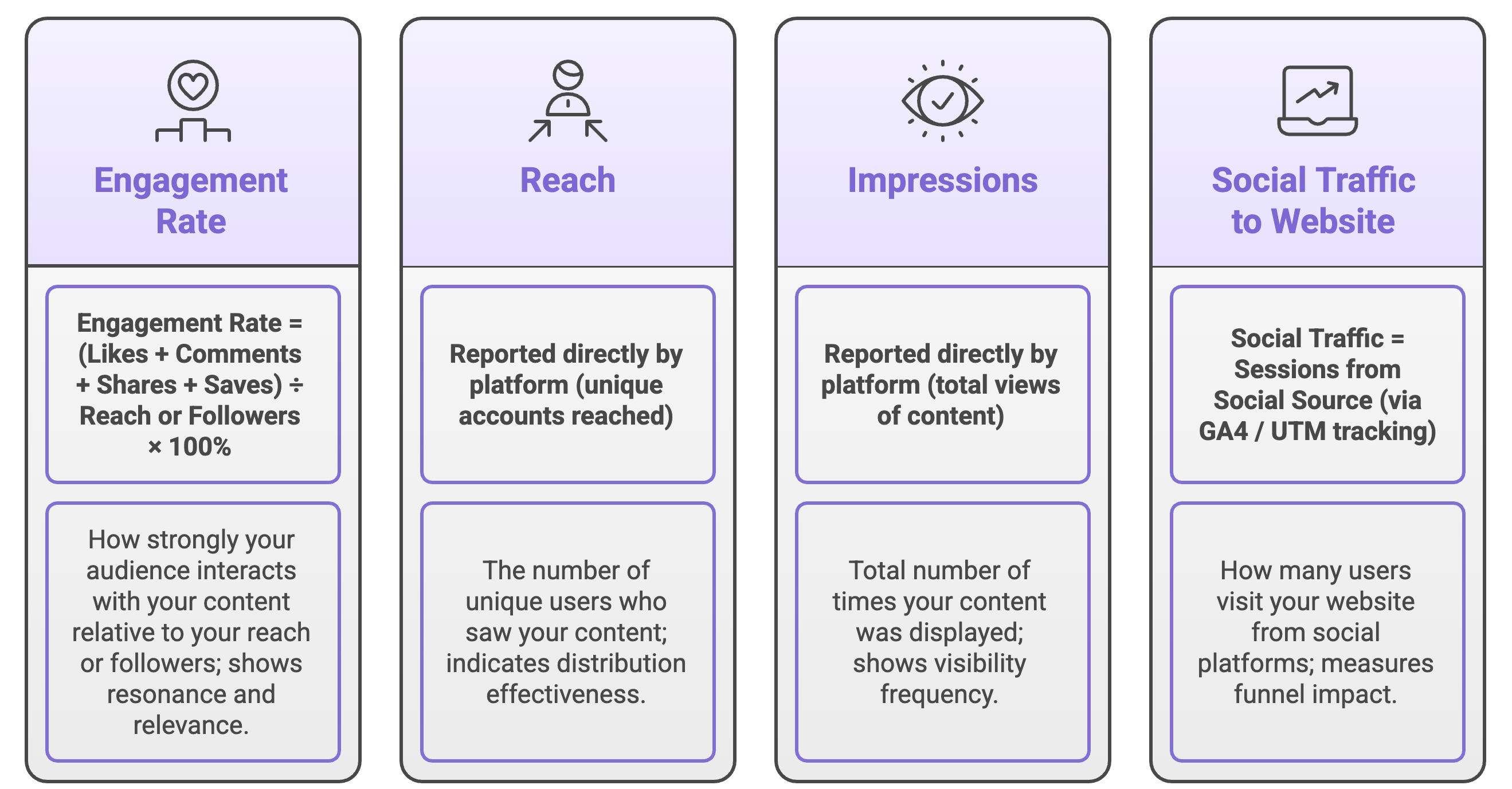
Social media analytics helps you see how your content performs, how your audience behaves, and what actually drives results. Engagement metrics show emotional connection, reach reveals visibility, audience insights explain who you're talking to, and UTMs tell you which posts send traffic to your website.
Paid Media Analytics
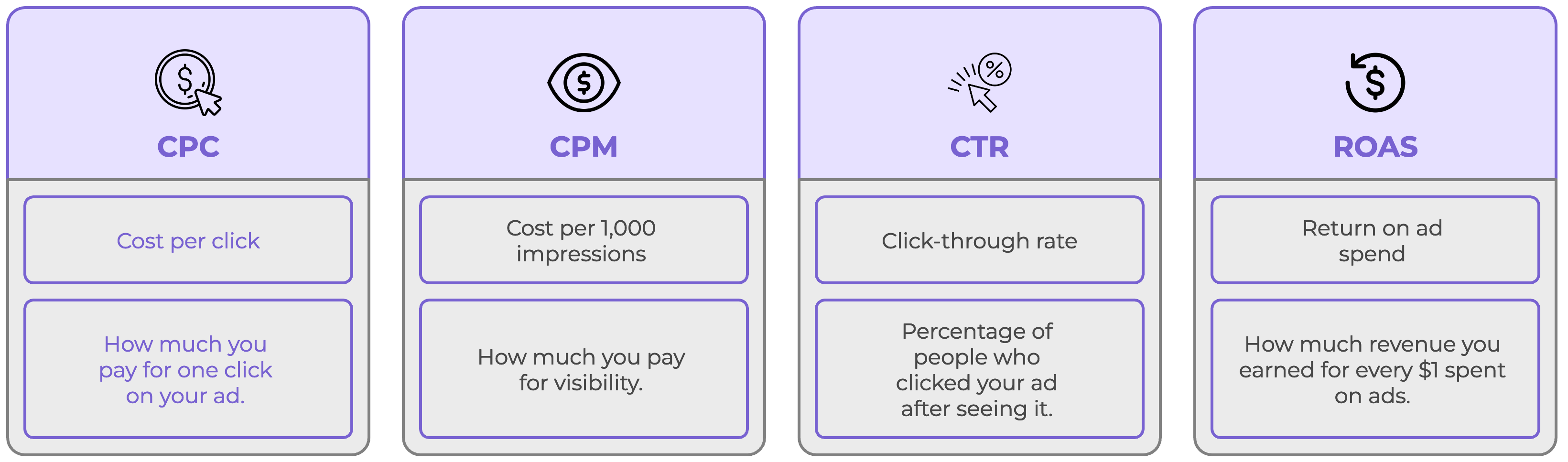
By tracking CPC, CPM, CTR, and ROAS, then connecting those numbers to campaign goals, you can quickly adjust your ads and improve performance. Paid media works best when treated as an ongoing cycle of testing, analyzing, and optimizing. When you integrate this data into tools like GA4 or Looker Studio, you get a complete picture of what drives profitable results.
Email Marketing and CRM Metrics
E-commerce Performance Tracking
E-commerce analytics is the process of tracking and analyzing online shopping behavior to improve sales performance and the customer experience.
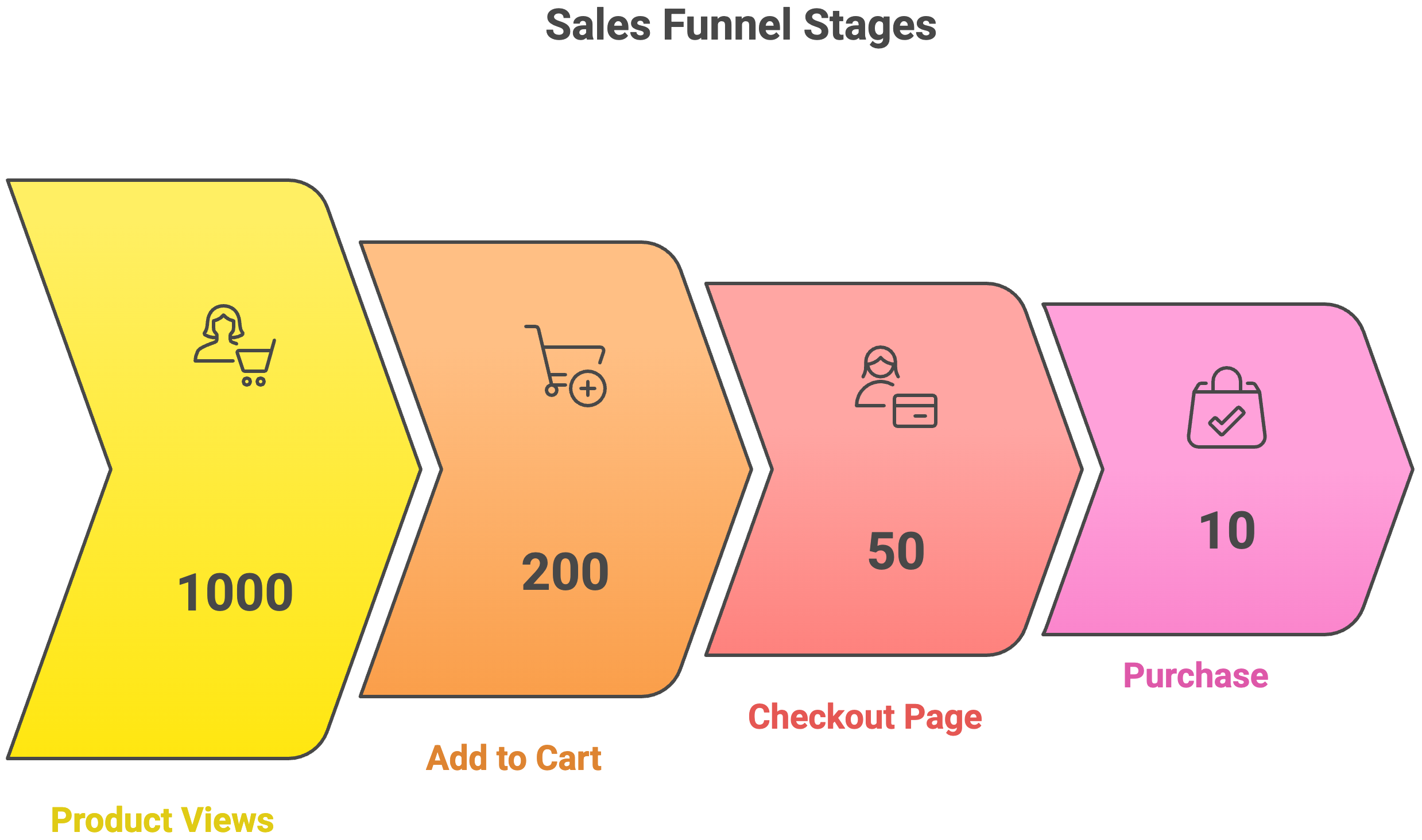
Sales Funnel Stages
- Product Views: people explore item pages;
- Add to Cart: interest grows;
- Checkout Page: they're ready to buy;
- Purchase: final conversion.
Common E-Commerce Metrics
- Average Order Value (AOV): the average amount each customer spends per order;
- Customer Lifetime Value (CLV): how much revenue the average customer generates over their entire relationship with your brand;
- Device Performance: mobile vs. desktop;
- Cart Abandonment: how many customers add items but don't buy.
E-commerce analytics gives businesses a clear, data-driven understanding of how people shop online, from the moment they view a product to the moment they buy (and buy again). By tracking the sales funnel, analyzing device behavior, monitoring cart abandonment, and focusing on value-based metrics like AOV and CLV, companies can remove friction, improve the shopping experience, and make smarter decisions about where to invest time and budget.
1. Which metric best indicates how engaging a webpage is?
2. Your blog post has high impressions but very low clicks. What is the most likely problem?
3. Which metric tells you how many unique users saw your content?
4. Which metric tells you how profitable your ads are?
5. Which metric reveals whether your email subject line is working?
6. The metric that shows the average amount customers spend in one order is called:
Thanks for your feedback!
Ask AI
Ask AI
Ask anything or try one of the suggested questions to begin our chat
What are the most important web and SEO metrics to track?
How do I use tools like Google Analytics 4 and Search Console for SEO analysis?
Can you explain how to identify and fix issues with user engagement on my website?
Awesome!
Completion rate improved to 2.13
Analytics by Channel
Swipe to show menu
Web and SEO Analytics
Web and SEO analytics give you deep visibility into how people find your site, what they care about, and where they drop off. By studying organic traffic, keyword performance, and user behavior, you can identify small improvements that lead to major growth. When combined with tools like Search Console and Semrush, analytics becomes a strategic system that reveals both where your website stands today and how to make it better tomorrow.
Social Media Analytics
Social media analytics helps you see how your content performs, how your audience behaves, and what actually drives results. Engagement metrics show emotional connection, reach reveals visibility, audience insights explain who you're talking to, and UTMs tell you which posts send traffic to your website.
Paid Media Analytics
By tracking CPC, CPM, CTR, and ROAS, then connecting those numbers to campaign goals, you can quickly adjust your ads and improve performance. Paid media works best when treated as an ongoing cycle of testing, analyzing, and optimizing. When you integrate this data into tools like GA4 or Looker Studio, you get a complete picture of what drives profitable results.
Email Marketing and CRM Metrics
E-commerce Performance Tracking
E-commerce analytics is the process of tracking and analyzing online shopping behavior to improve sales performance and the customer experience.
Sales Funnel Stages
- Product Views: people explore item pages;
- Add to Cart: interest grows;
- Checkout Page: they're ready to buy;
- Purchase: final conversion.
Common E-Commerce Metrics
- Average Order Value (AOV): the average amount each customer spends per order;
- Customer Lifetime Value (CLV): how much revenue the average customer generates over their entire relationship with your brand;
- Device Performance: mobile vs. desktop;
- Cart Abandonment: how many customers add items but don't buy.
E-commerce analytics gives businesses a clear, data-driven understanding of how people shop online, from the moment they view a product to the moment they buy (and buy again). By tracking the sales funnel, analyzing device behavior, monitoring cart abandonment, and focusing on value-based metrics like AOV and CLV, companies can remove friction, improve the shopping experience, and make smarter decisions about where to invest time and budget.
1. Which metric best indicates how engaging a webpage is?
2. Your blog post has high impressions but very low clicks. What is the most likely problem?
3. Which metric tells you how many unique users saw your content?
4. Which metric tells you how profitable your ads are?
5. Which metric reveals whether your email subject line is working?
6. The metric that shows the average amount customers spend in one order is called:
Thanks for your feedback!