Research Workflow
Swipe to show menu
Claude is especially useful for research tasks because it can work with large amounts of information, compare different sources, and turn complex material into a clear summary.
Before starting your research prompts, you can enable Adaptive Thinking. This allows Claude to spend more effort on complex tasks, which is especially useful when comparing sources, analyzing long documents, or building a structured research summary.
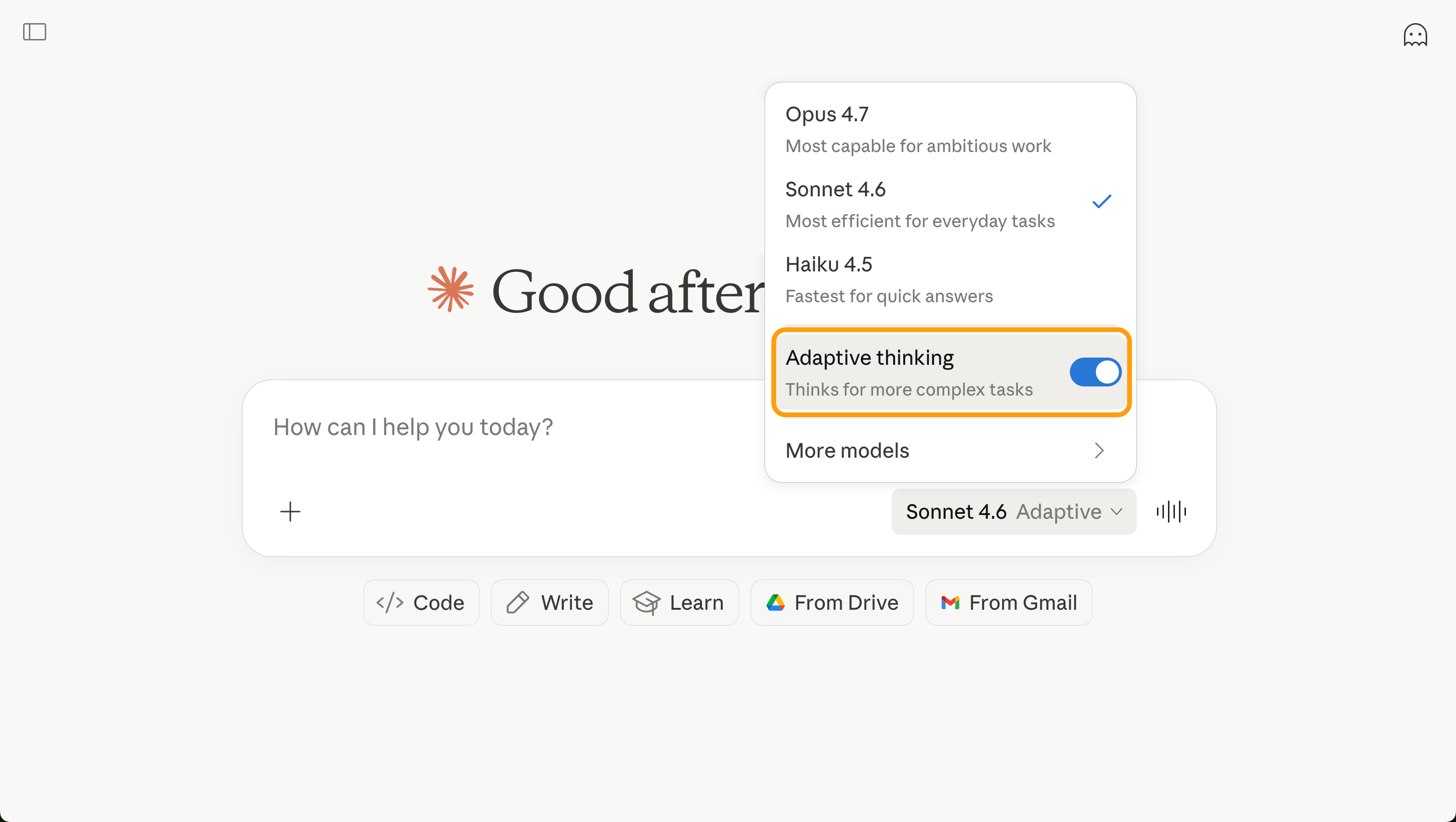
With Adaptive Thinking enabled, Claude can reason more carefully through the material, connect related ideas, and produce more complete answers. This makes it a helpful setting for research workflows where accuracy, structure, and deeper analysis matter.
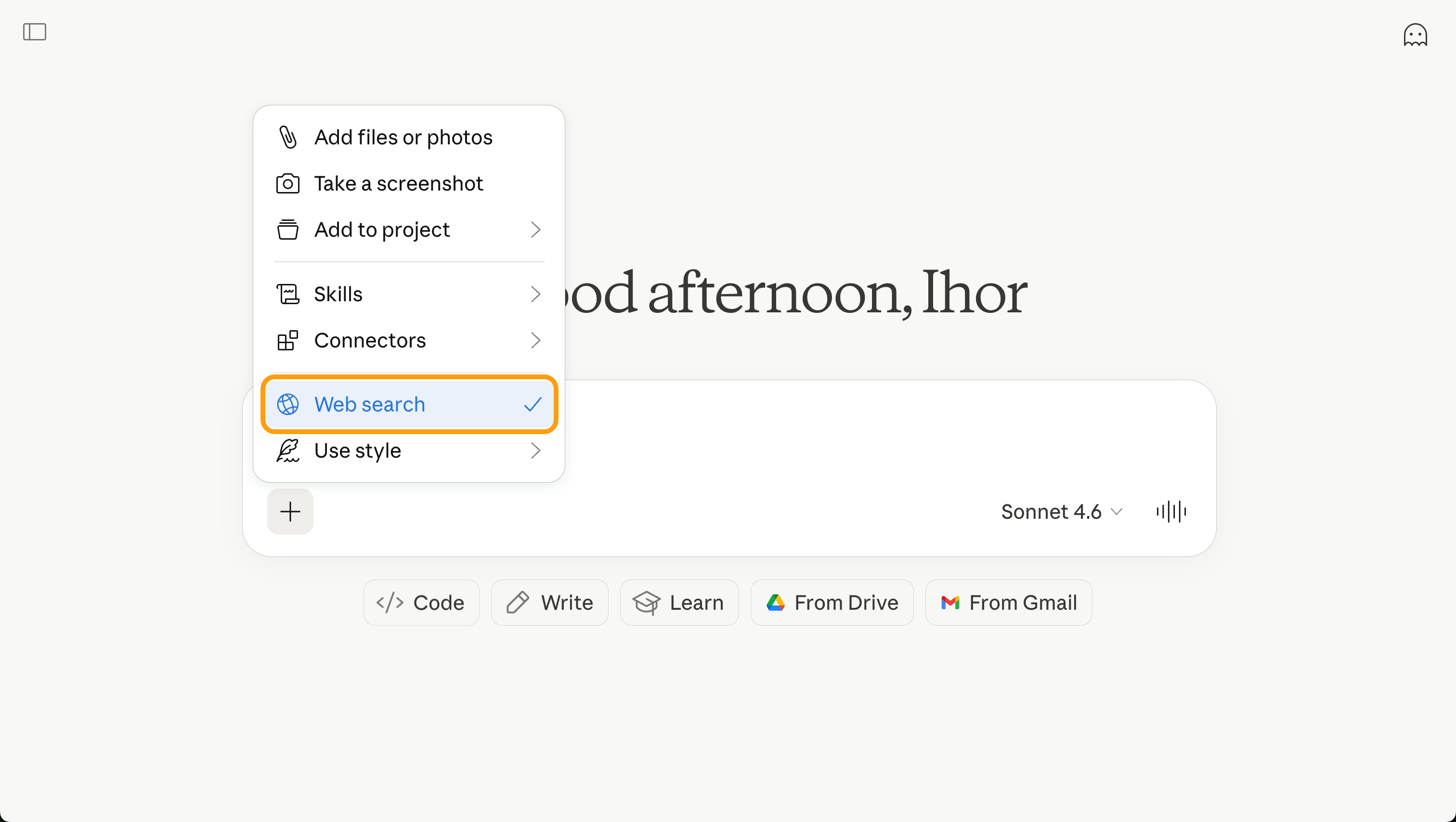
You can also enable Web Search when your research requires up-to-date information. This lets Claude search the web directly instead of relying only on its built-in knowledge or uploaded files.
Web Search is especially useful for checking recent news, current statistics, product updates, market trends, or any topic where information may have changed. For research workflows, it helps Claude gather fresher sources, compare information, and provide more reliable results.
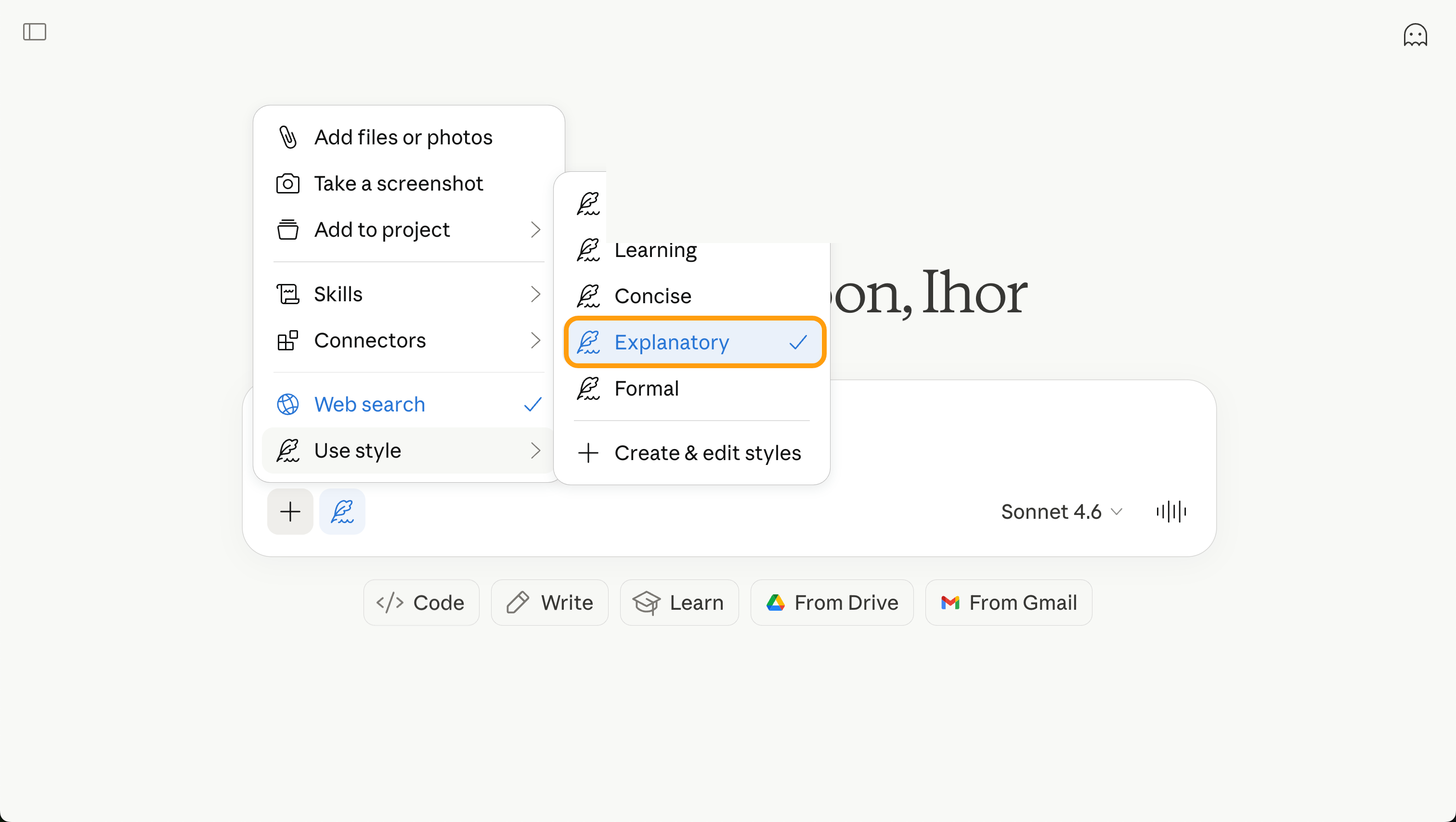
Under the Web Search switch, you can also choose a style for Claude's response. For research tasks, setting the style to Explanatory can be very helpful because it encourages Claude to give clear, focused answers without unnecessary wording, casual phrasing, or emojis.

You can also create your own custom style and define specific rules for it.
Thanks for your feedback!
Ask AI

Ask AI

Ask anything or try one of the suggested questions to begin our chat
