Setting Clear Marketing Objectives
Swipe to show menu
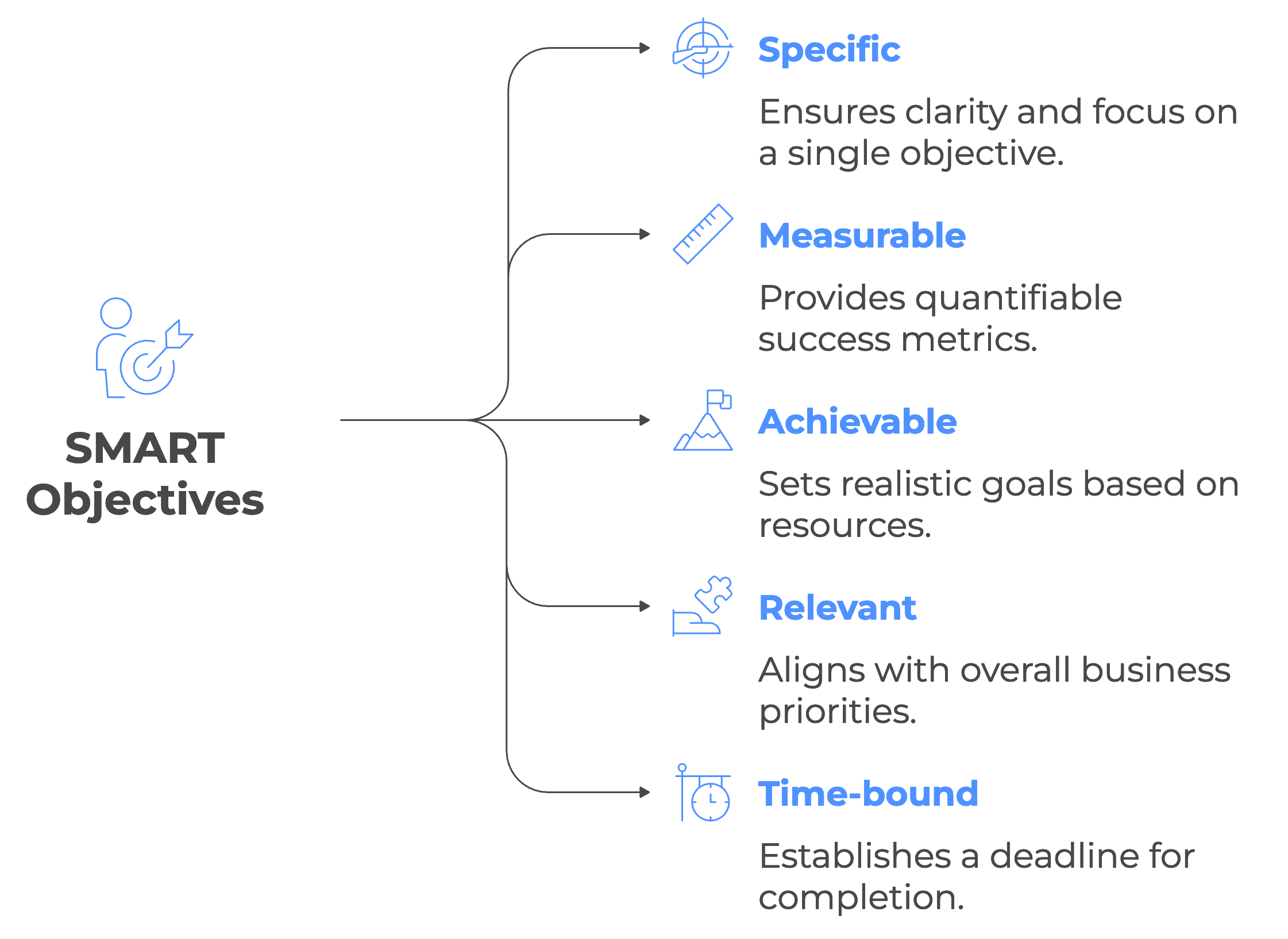
Define SMART objectives — specific, measurable, achievable, relevant, and time-bound — to ensure efforts are focused and effective. Use SWOT analysis to evaluate internal factors like strengths in customer service or weaknesses in digital presence and external factors such as market opportunities or competitive threats.
Competitive analysis highlights your competitors' strengths and weaknesses, revealing gaps to exploit or opportunities to refine your strategy. Use tools like SEMrush to analyze competitors' focus areas, like SEO or social media, and adapt your approach accordingly.
SWOT Analysis
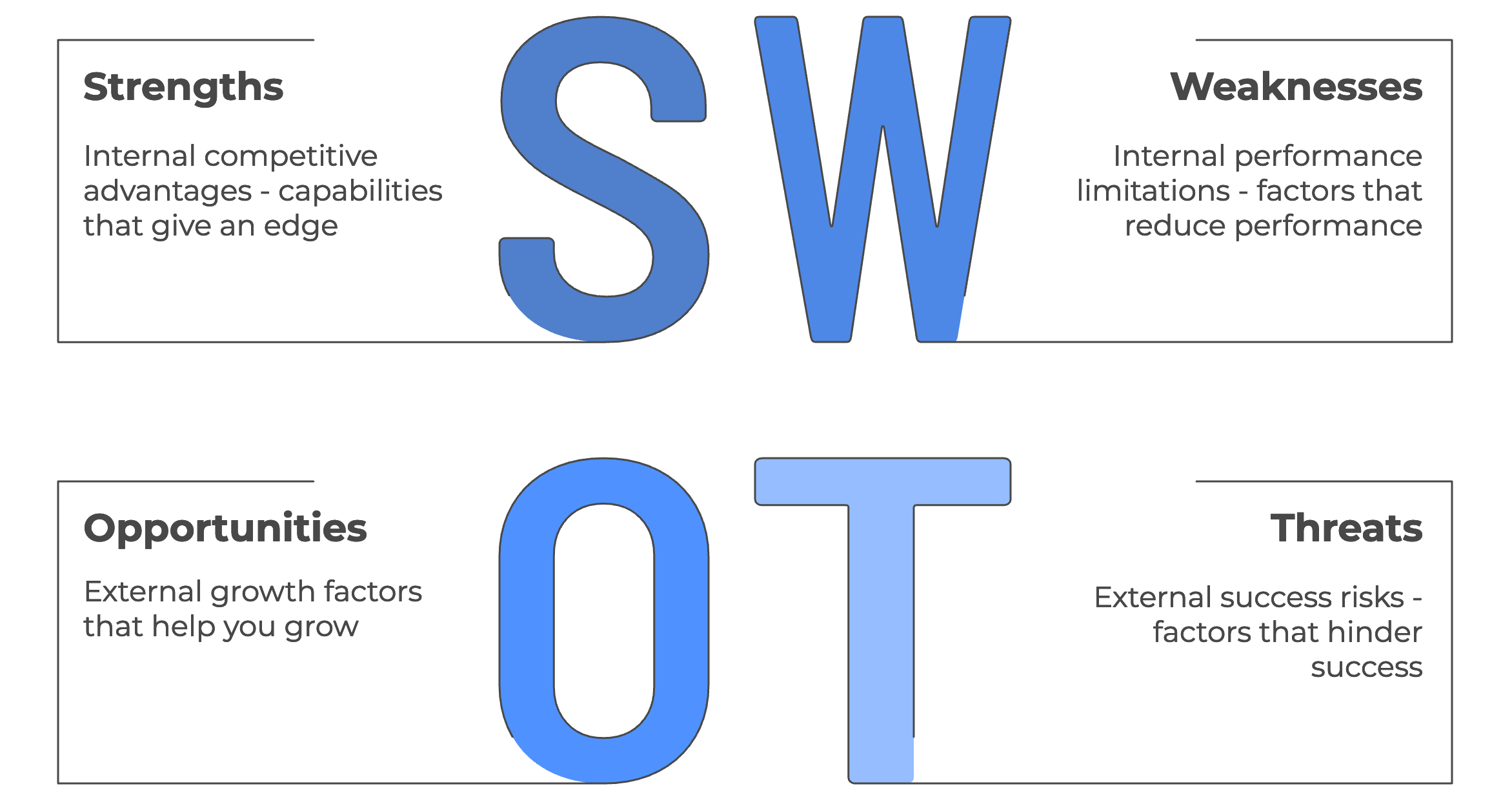
It identifies the key internal and external factors that shape your marketing strategy.
-
Strengths and Weaknesses = Internal → under your control;
-
Opportunities and Threats = External → influenced by the market.
Align every goal with a measurable outcome and a timeline.
Use SWOT insights to prioritize goals that are realistic yet growth-driven.
Example Flow
"Low conversion rate" (Weakness) ➜ "Improve landing page UX" (Specific) ➜ "+20% conversions in 3 months" (SMART Goal)

Internal factors (strengths and weaknesses) can be controlled or improved by the company, while external factors (opportunities and threats) must be monitored and strategically addressed.
1. In a SWOT analysis, which factor would most likely be categorized as a threat?
2. Match the strategic situation with the most relevant analytical framework:
3. A marketing team sets the objective: "Increase organic traffic significantly within the next year." Which element of the SMART framework is most clearly missing?
Thanks for your feedback!
Ask AI

Ask AI

Ask anything or try one of the suggested questions to begin our chat
Setting Clear Marketing Objectives
Define SMART objectives — specific, measurable, achievable, relevant, and time-bound — to ensure efforts are focused and effective. Use SWOT analysis to evaluate internal factors like strengths in customer service or weaknesses in digital presence and external factors such as market opportunities or competitive threats.
Competitive analysis highlights your competitors' strengths and weaknesses, revealing gaps to exploit or opportunities to refine your strategy. Use tools like SEMrush to analyze competitors' focus areas, like SEO or social media, and adapt your approach accordingly.
SWOT Analysis
It identifies the key internal and external factors that shape your marketing strategy.
-
Strengths and Weaknesses = Internal → under your control;
-
Opportunities and Threats = External → influenced by the market.
Align every goal with a measurable outcome and a timeline.
Use SWOT insights to prioritize goals that are realistic yet growth-driven.
Example Flow
"Low conversion rate" (Weakness) ➜ "Improve landing page UX" (Specific) ➜ "+20% conversions in 3 months" (SMART Goal)
Internal factors (strengths and weaknesses) can be controlled or improved by the company, while external factors (opportunities and threats) must be monitored and strategically addressed.
Thanks for your feedback!
