Audience Research for Blogging
Swipe to show menu
Audience research is the process of closing the gap between who you think you're writing for and who is actually reading.
The Four Dimensions of Audience Understanding
Effective audience research covers four dimensions. Each one shapes different aspects of how content is written.
- Who they are: role, industry, experience level, goals, and context. Shapes vocabulary, assumed knowledge, and the examples that will resonate;
- What pain points they have: the specific frustrations, blockers, and unsolved problems that make them search in the first place. The entry point for all useful content;
- Their awareness level: how much they already know about the topic and the solution space. Determines depth, terminology, and where to start the explanation;
- Their content expectations: what format, length, and tone they expect based on where they are in their journey and what type of content they typically consume.
Identifying Target Readers
Practical ways to build an accurate reader definition:
- Community research: Reddit, Facebook groups, Slack communities, and forums. Read how real people describe their problems in their own words — this language belongs in your content;
- Q&A platforms: Quora, Stack Exchange, and "People Also Ask" on Google. The questions people ask publicly are the clearest signal of what they genuinely don't understand;
- Analytics and search data: Google Search Console, site analytics, and keyword tools show who is already finding your content and what language they use to look for it;
- Reviews and testimonials: product reviews, app store feedback, and customer testimonials contain unfiltered descriptions of pain points and desired outcomes — in the reader's exact words;
- Direct feedback: replies to newsletters, comments on existing posts, and customer support logs reveal the questions your current audience is still asking after reading your content;
- Competitor comment sections: what readers say in the comments of competitor articles tells you what the article missed, what confused them, and what follow-up questions it left unanswered.
Understanding Pain Points

A pain point is the specific, felt problem that drives a person to search. It is almost never the keyword itself — it is the frustration, confusion, or blocked goal that the keyword represents.
Pain points operate at three levels, each requiring a different content approach:
Audience Awareness Levels
Eugene Schwartz's awareness framework — originally developed for advertising — is one of the most useful tools in content strategy. It defines five stages a reader may occupy, each of which requires a completely different content approach.
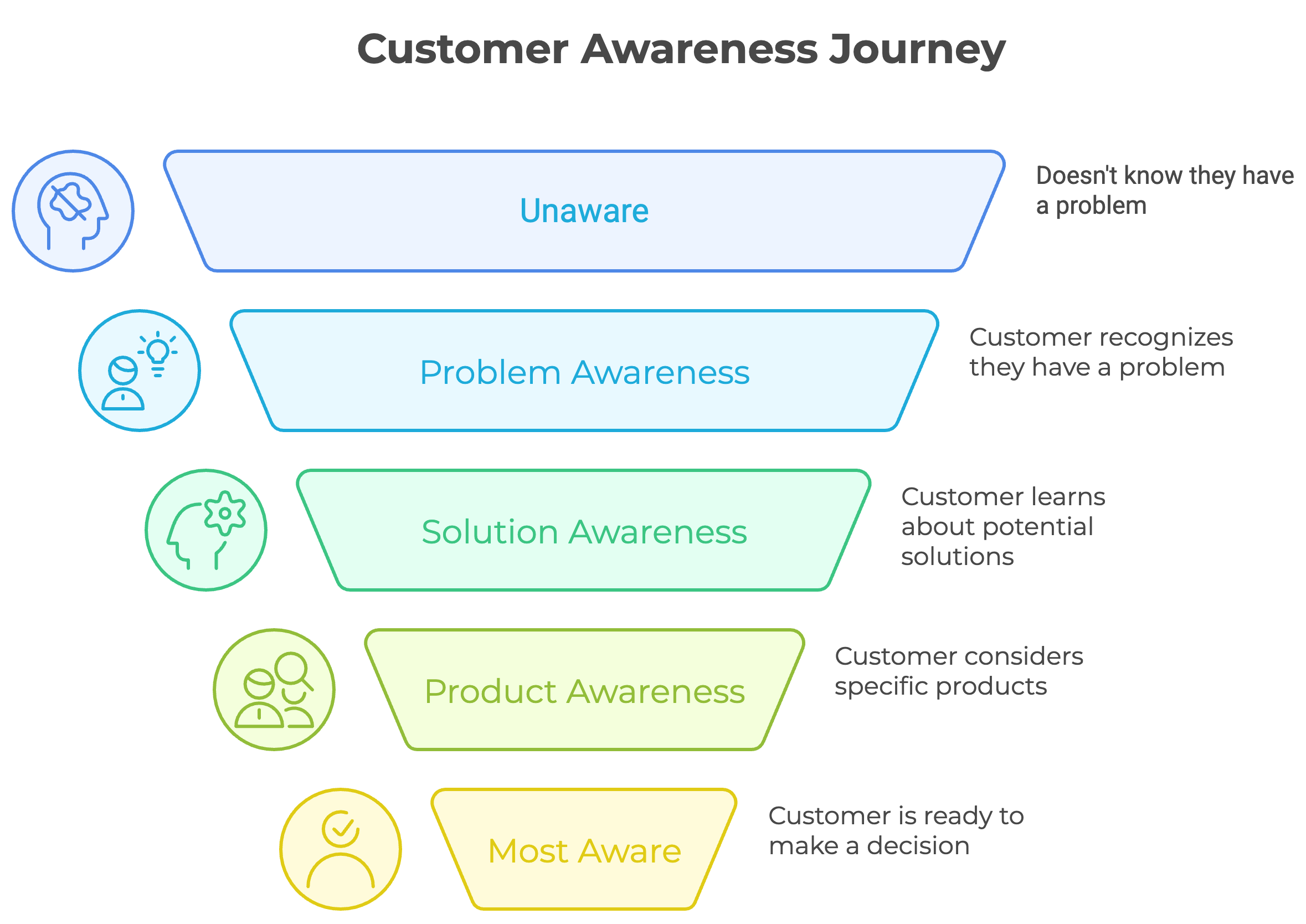
Content Expectations by Reader Type
Different readers bring different expectations to the same topic. A beginner and an expert searching the same keyword want fundamentally different things — depth, vocabulary, assumed context, and format all shift based on who is reading.
Building a Simple Reader Brief
Reader brief template:
- Who is this reader?
- What problem are they solving?
- What awareness level are they at?
- What do they expect from this content?
1. What is the most useful way to define a target reader?
2. Which source is best for finding the exact language readers use to describe their problems?
3. A reader is "problem aware". What content serves them best?
4. What should a writer avoid when writing for an expert reader?
Thanks for your feedback!
Ask AI

Ask AI

Ask anything or try one of the suggested questions to begin our chat
